
Across industries, the demand for lightweight, durable, and cost-efficient materials continues to grow. Among the top choices, Polypropylene (PP) and Polycarbonate (PC) stand out for their versatility and performance in automotive, electrical, and consumer goods manufacturing.
The trend is reflected in market projections, with the global polypropylene market expected to reach USD 177.3 billion by 2030 and the polycarbonate market likely to exceed USD 29,714.83 billion.
When comparing PP vs Polycarbonate, manufacturers focus on achieving the right mix of performance, cost, and long-term reliability. Polypropylene is preferred for its chemical resistance, flexibility, and affordability, while polycarbonate is chosen for its impact strength, optical clarity, and high heat tolerance.
This article provides a clear comparison of PP vs Polycarbonate across performance, economic, and application parameters to help OEMs, Tier-1 suppliers, and procurement teams make confident material decisions that align with production goals.
Key Takeaways
- Polypropylene (PP) is lightweight, flexible, chemical-resistant, and cost-effective, ideal for automotive, packaging, and medical applications.
- Polycarbonate (PC) offers high impact strength, heat resistance, and optical clarity suitable for electronics, lighting, and safety equipment.
- PP ensures process efficiency and affordability, while PC provides superior toughness and visual appeal.
- Use PP for lightweight and chemically exposed components, and PC for durable, heat-resistant, or transparent products.
- Evaluating the physical, mechanical, and thermal properties of both polymers helps achieve the best balance between performance and cost.
Now, let’s take a closer look at Polypropylene and understand why it’s preferred for cost-sensitive, high-volume production.
Polypropylene (PP): Versatile and Cost-Efficient Polymer
Polypropylene is a semi-crystalline thermoplastic valued for its lightweight structure, chemical resistance, and ease of processing. Its combination of affordability and versatility makes it one of the most widely used materials across consumer goods, automotive, and industrial manufacturing.
Key Applications of Polypropylene

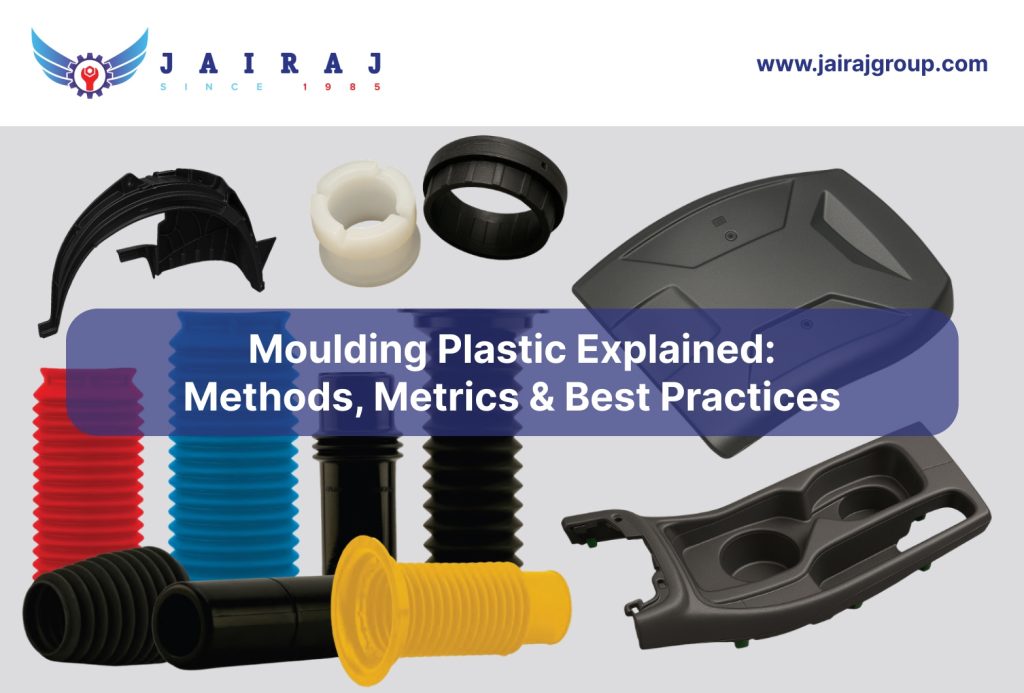
- Automotive: Interior trims, air ducts, bumpers, and battery casings for weight reduction and durability. Brake & Accelerator Pedals and Plastic Bellows & Struts demonstrate PP’s strength and flexibility in automotive applications.
- Medical & Healthcare: Disposable syringes, tubing, and IV components offering sterility and chemical resistance.
- Packaging: Containers, caps, and films ensuring moisture resistance and cost efficiency.
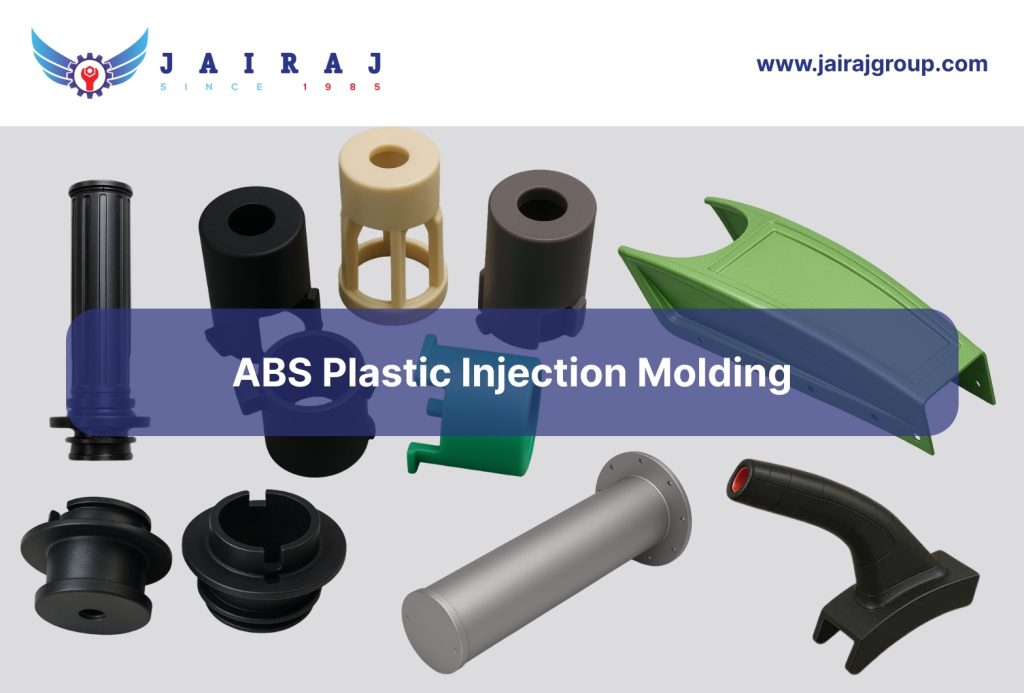
- Industrial Components: Duct connectors, chemical storage tanks, and protective housings, Hand Grips and Mobility Plastic Seating Solutions are examples of PP used for durable industrial parts.
- Consumer Goods: Furniture, toys, and household items combining flexibility and durability.
Advantages and Limitations of Polypropylene
Before exploring the detailed properties, it is helpful to understand what makes polypropylene a preferred choice for manufacturers. The following table summarizes its key advantages and limitations:
| Advantages of Polypropylene (PP) | Limitations of Polypropylene (PP) |
|---|---|
| Lightweight and easy to mold for complex shapes | Limited heat resistance compared to polycarbonate |
| Excellent chemical and moisture resistance | Susceptible to UV degradation without stabilizers |
| Cost-effective for high-volume production | Surface bonding and painting require special treatments |
| Good fatigue resistance for living hinges and snap-fit parts | Lower optical clarity; not suitable for transparent products |
For manufacturers prioritizing lightweight design, chemical resistance, and cost efficiency, polypropylene remains a practical choice.
Having examined PP, we can contrast it with polycarbonate, which excels in high-strength and precision applications.
Polycarbonate (PC): High-Strength Polymer for Precision Applications
Polycarbonate is an amorphous thermoplastic known for its exceptional impact resistance, optical transparency, and thermal stability. It’s commonly used where durability and aesthetics are equally important, such as electronics, automotive glazing, and safety equipment.
Key Applications of Polycarbonate

- Automotive & Mobility: Headlamp lenses, instrument panels, and sunroof components requiring clarity and strength. Interior & Exterior Accessories showcase PC’s toughness and visual appeal in automotive applications.
- Electronics: Laptop housings, connectors, and lighting covers for thermal and mechanical reliability.
- Construction: Transparent panels, safety shields, and roofing sheets for impact-resistant structures.
- Medical Devices: Transparent casings and surgical instrument components.
- Consumer Products: Eyewear lenses, water bottles, and safety helmets combining clarity and toughness.
Advantages and Limitations of Polycarbonate
To fully grasp why polycarbonate is chosen for high-strength and visually critical applications, it is important to examine its benefits and limitations. The table below highlights the key points:
| Advantages of Polypropylene (PP) | Limitations of Polypropylene (PP) |
|---|---|
| Lightweight and easy to mold for complex shapes | Limited heat resistance compared to polycarbonate |
| Excellent chemical and moisture resistance | Susceptible to UV degradation without stabilizers |
| Cost-effective for high-volume production | Surface bonding and painting require special treatments |
| Good fatigue resistance for living hinges and snap-fit parts | Lower optical clarity; not suitable for transparent products |
With a clear understanding of each material individually, let’s now look at a detailed comparison between PP and PC across key properties.
For high-precision manufacturing needs, JaiRaj Group’s Precision Components from Advanced Polymers demonstrate PC’s use in durable, accurate parts across aerospace, automotive, and defense industries.
PP vs Polycarbonate: Material Properties and Application Insights
When comparing PP vs Polycarbonate, understanding how each polymer performs across key parameters is essential for making the right material choice.
Reviewing their properties side by side helps manufacturers, OEMs, and Tier-1 suppliers select the right polymer for specific applications.
The table below summarizes the essential material properties of PP vs Polycarbonate:
| Property | Polypropylene (PP) | Polycarbonate (PC) |
|---|---|---|
| Strength & Durability | Moderate tensile strength (25–40 MPa), high impact resistance, flexible and fatigue-resistant | Higher tensile strength (55–75 MPa), very high impact resistance, rigid and tough |
| Heat & Temperature Resistance | Service up to 100–125 °C, melting point 160–170 °C, lower heat deflection | Service up to 115–135 °C, melting point 260 °C, higher heat deflection |
| Flexibility & Elasticity | High elongation (2.4–900%), low modulus of elasticity, good for snap-fit and living hinges | Moderate elongation (10–138%), higher modulus of elasticity, stiffer and more rigid |
| Optical Properties | Opaque or translucent, limited optical clarity | Excellent optical clarity, UV opaque without additives |
| Chemical & Moisture Resistance | Excellent chemical and moisture resistance, hydrophobic | Moderate chemical resistance, sensitive to some solvents, better UV stability with additives |
| Density & Weight | Lightweight (0.90 g/cm³), easy to mold and handle | Denser (1.20 g/cm³), heavier but stronger |
| Surface & Processing | Requires surface treatment for bonding or painting, easy to process | Can be painted or treated, more processing care needed |
| Cost & Sustainability | Low cost, widely available, recyclable | Moderate to high cost, recyclable with limited grades |
Also Read: Polypropylene vs ABS: Choosing the Right Plastic
Understanding these properties allows manufacturers to choose the right polymer based on application requirements and production goals.
How to Choose Between Polypropylene and Polycarbonate?
Selecting the right polymer requires balancing performance, durability, and cost while considering the specific demands of your application. Both PP and PC have unique strengths that suit different industrial and consumer needs.

When to Opt for Polypropylene (PP):
- Weight-Sensitive Applications: Perfect for parts where reducing mass matters, like automotive panels or packaging.
- Exposure to Chemicals or Moisture: Suitable for industrial containers, pipes, and components in contact with liquids.
- High-Volume or Cost-Conscious Production: Ideal for disposable items or mass-produced components requiring efficiency.
- Flexible and Dynamic Parts: Works well for snap-fit designs, hinges, or components that need repeated bending.
When to Opt for Polycarbonate (PC):
- Impact-Resistant and Safety-Critical Parts: Best for protective covers, shields, or components exposed to mechanical stress.
- High Heat or Outdoor Use: Reliable for electrical housings, structural panels, or parts exposed to sun and heat.
- Transparent or Visual-Centric Applications: Suitable for lenses, display covers, and automotive lighting requiring clear visibility.
- Structural and Load-Bearing Components: Supports long-lasting, mechanically demanding applications in automotive and industrial sectors.
Strategic Approach
Manufacturers can combine both materials for optimal results. Use PP where lightweight flexibility and chemical resistance are priorities, and PC where strength, optical clarity, or heat tolerance is required.
This balanced approach ensures cost-effective, durable, and reliable products tailored to each application.
Also Read: Evaluating the Best OEM Plastic Manufacturers in India
JaiRaj Group: Your Partner in Material Innovation and Reliability
In advanced manufacturing, selecting the right polymer between polypropylene (PP) and polycarbonate (PC) directly impacts product strength, cost efficiency, and long-term reliability.
JaiRaj Group helps OEMs and Tier-1 suppliers make informed polymer decisions through five critical areas:
- Performance Evaluation: Assessing polypropylene for flexible, high-volume parts and polycarbonate for impact-resistant, transparent, or heat-critical components ensures each material meets design and operational goals.
- Design and Tooling Support: Early-stage collaboration and design-for-manufacturing reviews reduce errors, minimize material waste, and optimize production cycles. PP is tailored for cost-effective, high-volume parts while PC suits high-strength and visually sensitive components.
- Versatile Manufacturing Capabilities: With advanced injection molding, extrusion, and assembly processes, JaiRaj aligns material selection, PP or polycarbonate, with product complexity, production scale, and performance requirements.
- Operational Efficiency: Strategically located facilities in Manesar, Sanand, and Aurangabad reduce lead times, lower logistics costs, and maintain operational resilience regardless of polymer choice.
- Industry Expertise: Backed by 35 plus years of experience and certifications such as IATF 16949 and ISO, JaiRaj delivers polymer solutions across automotive, industrial, and consumer applications, including:
Partnering with JaiRaj Group provides more than just materials. It offers guidance to choose between polypropylene and polycarbonate in a way that balances cost, performance, and sustainability. Manufacturers can achieve optimized production, durable products, and reliable performance across all applications.
Conclusion
The right polymer choice directly influences product durability, functionality, and manufacturing efficiency. The PP vs PC decision goes beyond technical specs, impacting long-term reliability, cost, and performance.
Manufacturers and procurement teams who evaluate both materials carefully can achieve three main benefits:
- Efficient manufacturing by selecting materials that fit processing capabilities and production volumes.
- Consistent product performance with components that handle mechanical stress, heat, and chemical exposure.
- Balanced cost and quality by using polypropylene for flexible, lightweight parts and polycarbonate for high-impact, visually critical components.
For your next industrial or automotive project, reach out to JaiRaj Group for expert guidance and customized polymer solutions that ensure durability, performance, and cost-effectiveness.
FAQs
1. Is polycarbonate more heat-resistant than polypropylene?
Polycarbonate can withstand higher temperatures, up to 130°C, compared to polypropylene’s maximum of around 100°C, making it suitable for applications requiring higher thermal stability.
2. Which polymer is more cost-effective: PP or PC?
Polypropylene is generally cheaper and easier to process, making it ideal for high-volume manufacturing and cost-sensitive projects.
3. Can both PP and Polycarbonate materials be recycled?
Both PP and PC are recyclable. Polypropylene recycling is more common and widely implemented, while polycarbonate recycling is possible but limited to specific grades.
4. Are both suitable for automotive applications?
Yes. Polypropylene is commonly used for interiors and trim parts, while polycarbonate is preferred for lenses, shields, and transparent load-bearing components.
5. Which material performs better outdoors?
Polycarbonate performs better outdoors when UV-stabilized. Polypropylene requires additional UV additives to maintain durability under sunlight exposure.