Polycarbonate vs ABS: Optimizing Materials for Durability and Design

Polycarbonate vs ABS: Optimizing Materials for Durability and Design
Table of Contents

From automotive interiors and consumer electronics to industrial housings and medical enclosures, both materials are integral to modern manufacturing. The polycarbonate abs comparison helps engineers and OEMs evaluate which polymer aligns best with their product and cost objectives.

The global polycarbonate market is projected to surpass USD 29,714.83 billion by 2030, while the ABS market is estimated to grow beyond USD 39.9 billion by 2028, highlighting the continued demand for strong, durable, and machinable thermoplastics.

When choosing polycarbonate ABS, polycarbonate offers superior impact strength, heat resistance, and transparency, while ABS is ideal for affordable, durable, and easy-to-process parts. This guide compares polycarbonate vs ABS across key performance metrics to help manufacturers make smart material choices.

Key Takeaways

  • Polycarbonate (PC) provides superior impact strength, optical clarity, and heat resistance, ideal for precision, safety, and transparent applications.
  • ABS offers strong mechanical performance, easy moldability, and affordability, making it a top choice for consumer and automotive parts.
  • Polycarbonate suits high-stress and visually critical applications, while ABS works best in general-purpose, cost-efficient manufacturing.
  • Polycarbonate ensures optical clarity and heat endurance; ABS delivers reliable toughness and easy processing.
  • Evaluating polycarbonate ABS properties helps achieve the right balance between durability, appearance, and production cost.

Now, let’s focus on polycarbonate to see why it’s chosen for high-strength and visually critical components.

Polycarbonate (PC): High-Performance Engineering Plastic

Polycarbonate is an amorphous thermoplastic valued for its combination of toughness, transparency, and dimensional stability. Its resistance to impact and heat makes it a preferred choice in demanding environments where durability and appearance are equally important.

Now that we know its strengths, let’s explore where polycarbonate performs best.

Key Applications of Polycarbonate
  • Automotive & Transportation: Headlamp lenses, interior panels, and sunroof components requiring strength and optical clarity.
  • Electronics: Enclosures, lighting covers, and connectors where thermal stability and precision are vital.
  • Construction: Transparent roofing sheets, glazing, and safety shields offering impact and weather resistance.
  • Medical: Transparent casings and device housings used in sterilizable equipment.
  • Consumer Goods: Eyewear lenses, water dispensers, and safety helmets combining clarity with toughness.

To align your high-strength and transparent component requirements with the right material choice, connect with JaiRaj Group  for polymer selection and tooling consultation. Contact here.

Let’s also review the advantages and limitations to understand its full potential.

Advantages and Limitations of Polycarbonate
Advantages of PolycarbonateLimitations of Polycarbonate
Exceptional impact resistance and durabilityHigher cost compared to ABS
Excellent optical transparency and gloss finishRequires UV stabilizers for outdoor use
High thermal stability up to 135°CScratches easily without surface coating
Good dimensional accuracy and rigidityCan release BPA if not properly formulated
Supports painting, coating, and printingMore complex processing requirements

 
Polycarbonate remains the preferred choice for components where performance, visual clarity, and structural integrity are critical.

Having looked at polycarbonate, it’s essential to understand ABS and how it balances strength, cost, and manufacturability.

Acrylonitrile Butadiene Styrene (ABS): Tough and Economical Thermoplastic

ABS is a terpolymer composed of three monomers: acrylonitrile for strength, butadiene for toughness, and styrene for rigidity and gloss. This combination provides ABS with a balanced mix of strength, machinability, and cost-effectiveness, making it widely used across industries.

Next, we’ll look at the practical applications that make ABS a versatile option.

Key Applications of ABS
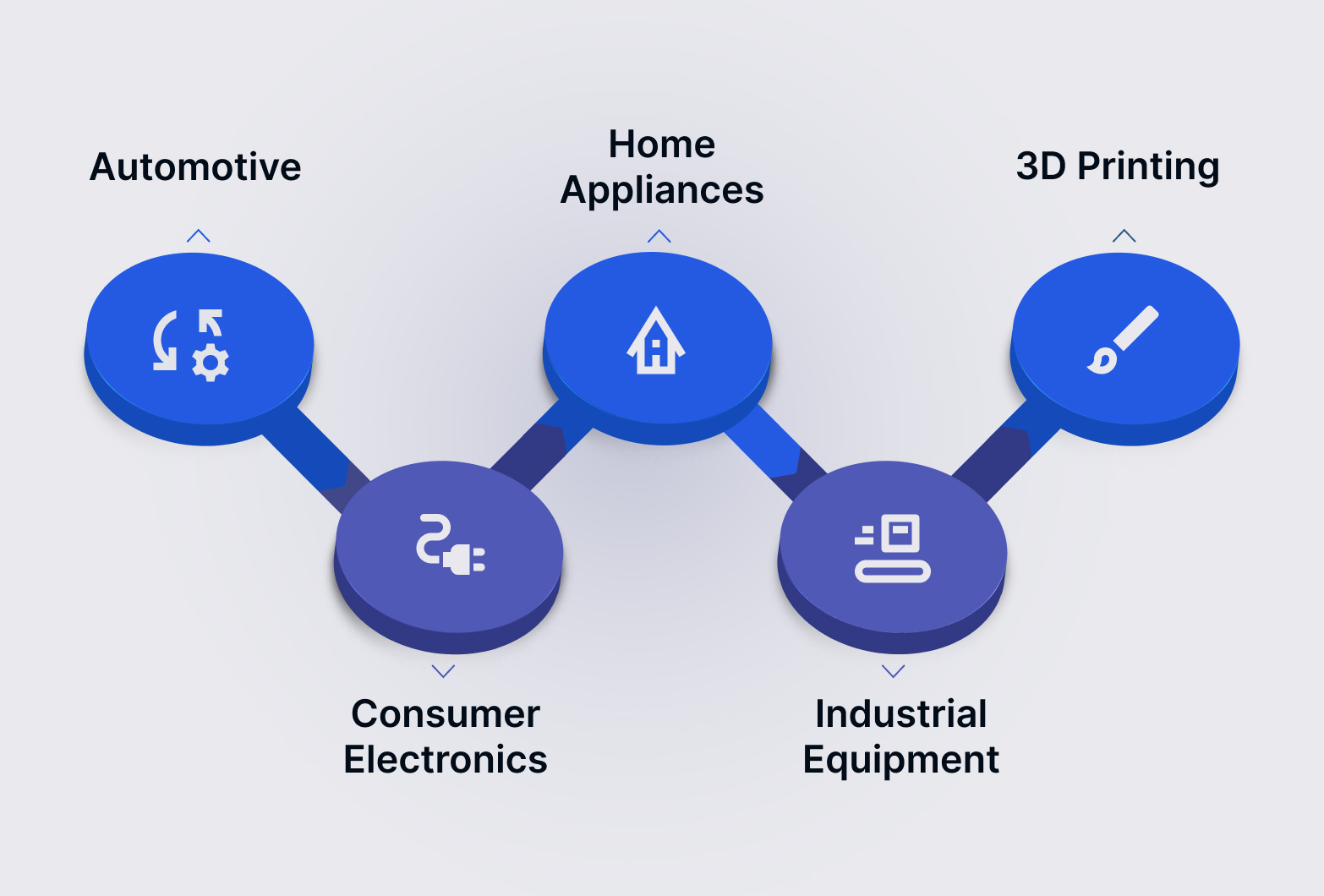
Key Applications of ABS

  • Automotive: Dashboards, trims, and body panels that combine rigidity with easy molding.
  • Consumer Electronics: Laptop casings, keyboards, and phone housings requiring a smooth surface finish.
  • Home Appliances: Vacuum cleaner parts, kitchen equipment, and protective covers.
  • Industrial Equipment: Enclosures, guards, and panels where toughness and cost efficiency matter.
  • 3D Printing: Widely used filament offering strength and versatility.

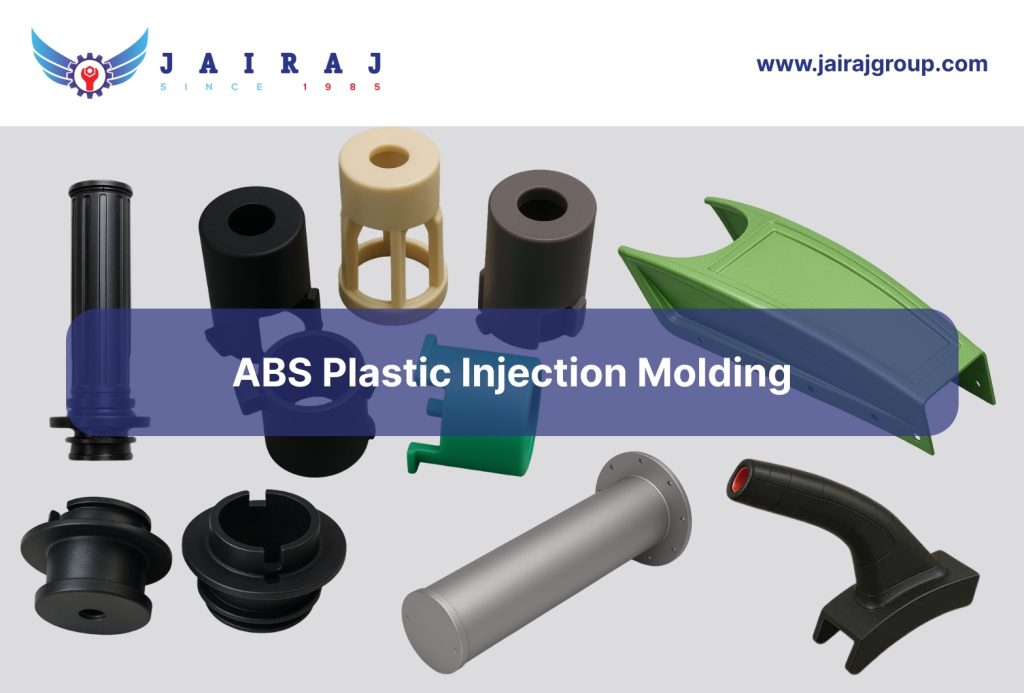
To ensure consistent performance and surface quality, JaiRaj Group applies ABS in dashboards, trims, and appliance housings using Plastic Injection Moulding and Extrusion Moulding techniques.

Let’s examine its advantages and limitations to see where ABS works best.

Advantages and Limitations of ABS
Advantages of ABSLimitations of ABS
Affordable and easy to processLower heat resistance than polycarbonate
Good impact resistance for most environmentsCan deform at temperatures above 100°C
Smooth surface finish suitable for paintingPoor UV resistance without stabilizers
Excellent machinability and moldabilityLimited transparency
Recyclable and widely availableModerate chemical resistance only

 
ABS remains an ideal choice for manufacturers who prioritize cost, design flexibility, and efficient mass production.

Also Read: Plastic Texturing Techniques for Parts: A Strategic Guide for Decision-Makers

To make things clearer, let’s compare polycarbonate and ABS side by side.
Material Comparison: Polycarbonate vs ABS for Modern Manufacturing

When comparing polycarbonate abs, it’s important to look beyond surface properties. The table below outlines their key material differences to help manufacturers select the right plastic for their application requirements.

PropertyPolycarbonate (PC)Acrylonitrile Butadiene Styrene (ABS)
Tensile Strength55–75 MPa (high)40–50 MPa (moderate)
Impact ResistanceExtremely high; nearly unbreakableGood but lower than PC
Heat ResistanceCan handle up to 135°CDeforms around 100°C
Optical PropertiesTransparent and glossyOpaque with smooth finish
Flexibility & RigidityRigid yet flexible under stressRigid, prone to cracking under bending
UV ResistanceNeeds stabilizers or coatingsLimited; can yellow under sunlight
Machinability & MoldingMachinable but needs careEasy to mold and machine
WeldabilityModerate; requires specific techniquesExcellent; commonly welded
Density~1.20 g/cm³~1.05 g/cm³
CostHigher cost, premium applicationsLower cost, mass manufacturing
RecyclabilityRecyclable but with complexityEasily recyclable
Best Suited ForTransparent, impact-resistant, and heat-tolerant partsCost-efficient, opaque, and general-purpose products

 
Also Read: Automotive Injection Molding Guide for Cost Optimization and Supplier Strategy

With this comparison in mind, let’s see how to choose the right material for your project.

Polycarbonate and ABS: Which is Better?

The right polycarbonate ABS material balances strength, heat resistance, visual quality, and cost. Using the appropriate polymer ensures components are durable, reliable, and meet performance and aesthetic requirements.

Choose Polycarbonate (PC) When:
  • Products need transparency or optical clarity, such as lenses and covers.
  • The application involves impact or high temperatures.
  • Components demand precision, durability, and dimensional stability.
  • A premium look and feel are critical for product aesthetics.
Choose ABS When:
  • Cost efficiency and easy manufacturability are top priorities.
  • Products don’t require transparency or extreme heat resistance.
  • You need a smooth, paintable surface for consumer or automotive parts.
  • The focus is on mass production and quick cycle times.

Strategic Material Approach:

Many manufacturers combine both materials in hybrid designs. For instance, polycarbonate abs blends (PC/ABS) are commonly used to achieve the best of both worlds,  the strength and heat resistance of PC with the easy processing and surface finish of ABS.

Such blends are widely adopted in automotive interiors, laptop housings, and safety equipment, offering balanced mechanical performance and cost efficiency.

Also Read: Polypropylene vs Plastic: Key Differences Explained

JaiRaj Group: Your Expert in Polycarbonate and ABS Solutions

In manufacturing and product design, selecting the right polymer sets the foundation for strength, reliability, and efficient production. The choice between polycarbonate ABS determines how components perform under impact, heat, and long-term use.

JaiRaj Group: Your Expert in Polycarbonate and ABS Solutions

JaiRaj Group helps OEMs and Tier-1 suppliers make informed decisions on polycarbonate ABS using five critical factors:

1. Impact Strength and Durability

Polycarbonate delivers exceptional toughness, making it ideal for protective, load-bearing, and precision components. ABS offers consistent mechanical strength for interior parts, trims, and high-volume applications where cost efficiency matters.

2. Thermal and Chemical Performance

Polycarbonate maintains stability under high temperatures and sunlight, while ABS resists moderate heat and common chemicals. This ensures each material performs reliably in its intended environment.

3. Design Optimization and Manufacturing Support

JaiRaj provides early-stage design and tooling expertise to reduce material waste and improve molding efficiency. Polycarbonate suits transparent and high-strength parts, while ABS enables complex shapes and large-scale production with ease.

4. Cost Efficiency and Value

ABS is ideal for budget-conscious, mass-produced parts, while polycarbonate justifies its higher cost with superior strength, heat resistance, and visual clarity. JaiRaj balances upfront material expenses with long-term performance.

5. Quality Compliance and Certification

All polycarbonate ABS solutions meet IATF 16949 and ISO standards, ensuring safety, durability, and regulatory compliance across automotive, electronics, industrial, and consumer sectors.

With over 35 years of expertise, JaiRaj Group ensures every project maximizes material performance using polycarbonate for strength and transparency, and ABS for cost-effective, high-volume production.

Conclusion

Deciding between polycarbonate and ABS greatly influences product quality, durability, and production outcomes. The polycarbonate vs ABS comparison is more than a material choice, it affects performance, longevity, and cost efficiency.

Manufacturers who assess both materials thoughtfully can achieve several advantages:

  • Enhanced production output by selecting materials suited to their fabrication and design needs.
  • Steady performance even in demanding conditions involving heat, impact, or continuous stress.
  • Cost-performance balance by using ABS for budget-friendly, mass-produced items and polycarbonate for tough, heat-resistant, or transparent components.

When planning your upcoming industrial or product development project, get in touch with JaiRaj Group to select materials that maximize durability, efficiency, and overall product excellence.

FAQs

1. Which performs better in high-temperature environments, polycarbonate or ABS?

Polycarbonate performs much better under heat, tolerating temperatures up to around 135°C. ABS, on the other hand, begins to deform at about 100°C, making polycarbonate a stronger choice for heat-intensive applications.

2. Is polycarbonate stronger than ABS?

Yes. Polycarbonate offers higher impact strength and durability than ABS, which is why it’s commonly used in helmets, protective gear, and automotive lighting components. ABS is sturdy but not as resilient when exposed to sudden impact or pressure.

3. Which is more cost-effective, polycarbonate or ABS?

ABS is more affordable and easier to process, ideal for large-scale manufacturing. Polycarbonate is costlier but offers greater strength, heat resistance, and clarity for performance-focused applications.

4. Can polycarbonate and ABS be blended together?

Yes. A PC/ABS blend combines the toughness of polycarbonate with the flexibility and cost benefits of ABS. This blend is widely used in automotive interiors, electronics housings, and appliance covers.

5. Is polycarbonate transparent while ABS is opaque?

Correct. Polycarbonate offers excellent optical clarity and is often used in transparent products like lenses and screens. ABS is opaque but provides a smooth surface that can be easily painted or finished for aesthetic applications.

Need Custom Plastic Components?

Get Precision-Engineered Solutions for Automotive, Aerospace, Defence & More.
What do you think?
Leave a Reply

Your email address will not be published. Required fields are marked *

Related news