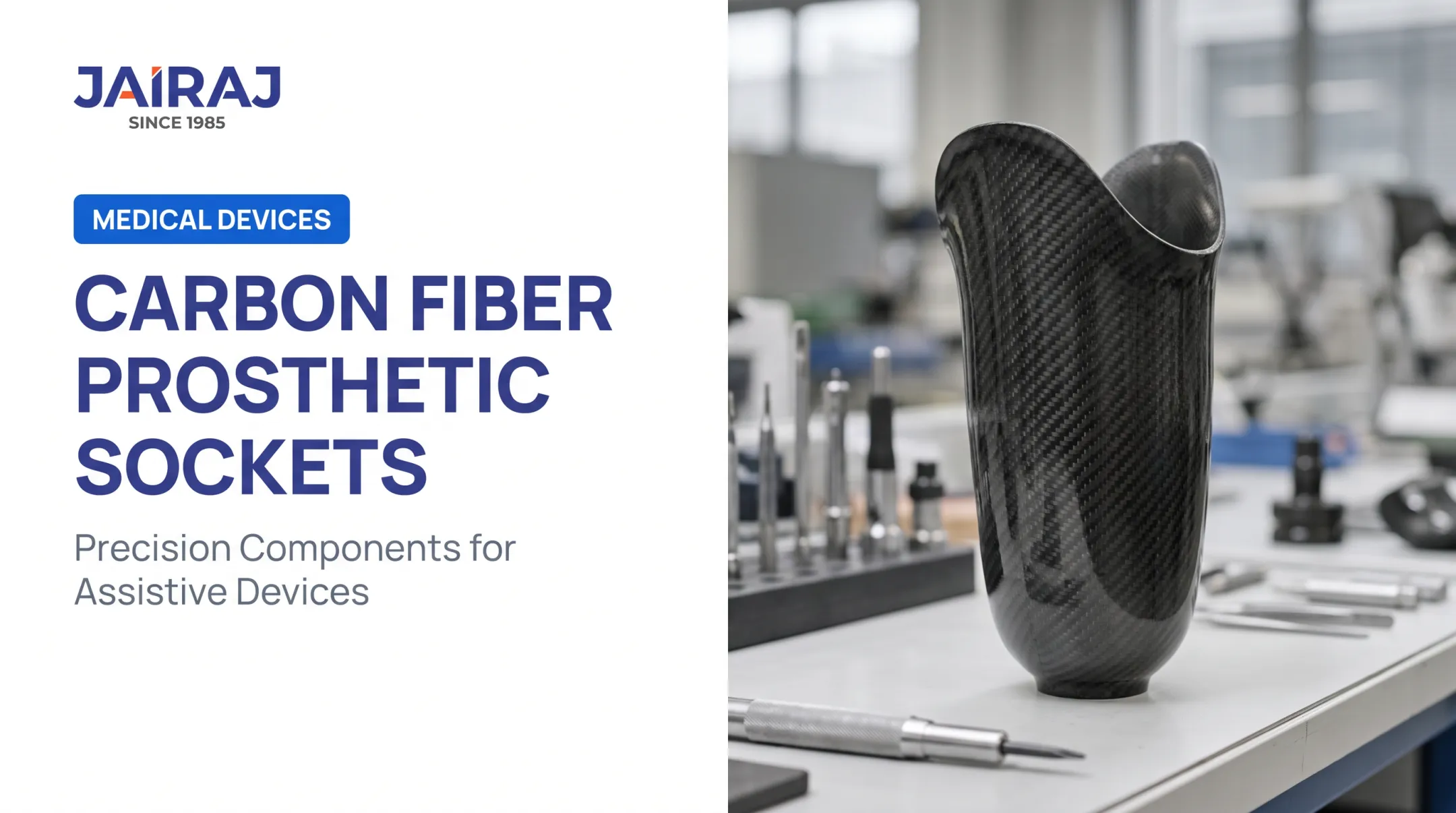

A flexible inner socket preform is a manufactured polymer component, or pre-shaped blank, that gives fabricators a repeatable starting point for a custom inner socket. It is not a patient-ready device. The final design still needs clinical and engineering evaluation.
This article covers the benefits and limits of flexible preforms, material and design choices, fabrication and quality requirements, and the questions to ask when qualifying a supplier.
Key Takeaways
- Flexible preforms may help with muscle movement and comfort, but evidence is system-specific.
- Balance flexibility against friction, creep, tear resistance, and skin-contact needs.
- Repeatable tooling, controlled forming, and batch records drive consistency.
- Qualify suppliers on polymer expertise, testing, traceability, and change control.
What Are Flexible Inner Prosthetic Socket Preforms?
What a preform is
A preform is a shaped or semi-finished polymer component that gets formed, trimmed, and relieved into a flexible inner socket. It differs from four related items:
- A raw thermoplastic sheet, which has no socket geometry
- A finished flexible inner socket, which is fitted to a patient
- A soft liner, a separate wearable interface
- The rigid outer socket or frame, which provides structural support
Terminology is inconsistent. Xtremity sells FLEX Preforms that are later formed into flexible inner sockets, while Ottobock calls a comparable product simply EVA sheet plastic. O&P practice has no standard equivalence between "blank," "semi-finished," and "preform." This article uses "preform" for a pre-shaped starting component.
How it works within the socket system
The flexible inner wall sits inside a rigid frame. The frame handles containment and stability. Lowered trim lines and windows in the frame let the inner wall conform to muscle movement while keeping contact with the limb. Suspension, weight transfer, rotational control, and pressure relief come from the whole assembly, not the inner wall alone.
Why manufacturers use preforms
A repeatable preform reduces variation compared with shaping every inner component from flat sheet. Users include fabrication laboratories, O&P professionals, and device manufacturers developing socket systems. Custom geometry, clinical assessment, and final fitting remain essential.
Why Flexible Inner Socket Preforms Matter
The evidence supports specific benefits for specific configurations. It does not support blanket claims.
Muscle activity and comfort
A 2021 randomized crossover trial compared the Northwestern University flexible subischial socket (NU-FlexSIV) with ischial containment sockets. Of 30 enrolled, 25 completed. Mean comfort scores were 8.4 versus 7.0 at seven weeks (PubMed trial record).
That comparison covers complete custom systems, so the gain cannot be credited to the resin alone.
A companion gait study found no significant week-7 gait differences at normal self-selected speed.
Donning, doffing, and volume changes
- Surface friction affects how easily the socket goes on and comes off. Some silicone-free EVA grades are internally lubricated for this reason.
- Residual limb volume shifts with activity and time of day. In a 24-person transfemoral study, the maximum post-doffing increase measured was 5.9%, mostly within the first 10 minutes.
- That study did not test preform accommodation, so it describes the problem rather than proving a solution.
Stability and control
Too much flexibility causes movement, rotation, and poor load transfer. O&P design reviews warn that creep or stretch can prevent a total-contact fit from being maintained. Flexibility must be designed alongside containment, suspension, alignment, and frame rigidity.

Suitability varies. Reviews point to cases that may favor flexible construction:
- Adherent scars
- Soft-tissue invaginations
- Sensitive bony prominences
- Unstable residual-limb volumes
Authors of the NU-FlexSIV technique favor experienced, compliant users with well-healed, well-regulated-volume limbs. A military evaluation, with only 4 of 11 participants completing, reported mixed walking and running comfort.
Materials and Design Considerations
Selecting the polymer family
Published socket-specific data comes mostly from manufacturers:
| Material family | Published examples | Notes |
|---|---|---|
| EVA | ThermoLyn soft 616T53 (160 °C forming per brochure); ThermoLyn supra flexible 616T112 (80-130 °C depending on heating method) | Grade and heating method change the window |
| EVA with silicone | ThermoLyn supra soft plus silicone 616T111 | Marketed for highly flexible transfemoral inner sockets |
| Silicone-free EVA | OP-TEK Flex Comfort | Internally lubricated; cold-flow resistance is qualitative |
| PE copolymer | Orfitrans Excel | Bubble or drape forming |
Attributable TPU or TPE inner-socket datasheets with comparable mechanical results are hard to find. No universal hardness, tear, friction, or creep acceptance values exist. Take those numbers from supplier data, customer specifications, or validated testing.

Thickness and local stiffness
Thickness, hardness, geometry, and reinforcement together set flexibility. One manufacturer instruction lists a 3.5 mm preform thickness with possible slight thinning during forming.
Assess muscle definition, bony prominences, activity level, suspension, and outer-socket stiffness before choosing uniform properties or intentional zones, reliefs, windows, and reinforced attachment areas.
Friction, skin contact, and thermal comfort
Designers face a trade-off. A slick skin-facing surface eases donning, but the outer surface needs enough grip against the frame to limit movement. Moisture, heat, cleaning, and odor matter as well.
For skin contact, FDA's September 2023 ISO 10993-1 guidance lists cytotoxicity, sensitization, and irritation as intact-skin endpoints. It is not a mandatory checklist. "Silicone free" describes composition, not hypoallergenic performance, so avoid that claim without qualified evidence.
Forming and long-term stability
- Compare bubble, drape, and vacuum forming for melt strength, reheating behavior, seam strength, and wall uniformity
- Watch for creep, delamination, edge roll-out, window deformation, and fatigue
- Evaluate the preform with the full assembly, liner, suspension, and fabrication process, not in isolation
Manufacturing and Quality Requirements
Tooling for repeatability
CAD data, positive molds, forming fixtures, trim tools, and inspection gauges produce consistent preforms. Qualify tools, maintain them, and control revisions. Tool wear and process drift alter dimensions and fit over time.
Controlling forming and finishing
A typical workflow runs from material receipt and conditioning through heating, forming, cooling, trimming, finishing, inspection, and packaging. The exact sequence depends on the polymer and the validated process. Temperature, forming time, vacuum or pressure, cooling, and operator method all affect wall thickness, residual stress, and surface quality.

Under FDA's MDSAP audit approach, validate outputs that cannot be fully verified afterward, set acceptance criteria beforehand, and keep equipment maintenance records.
Inspection and testing
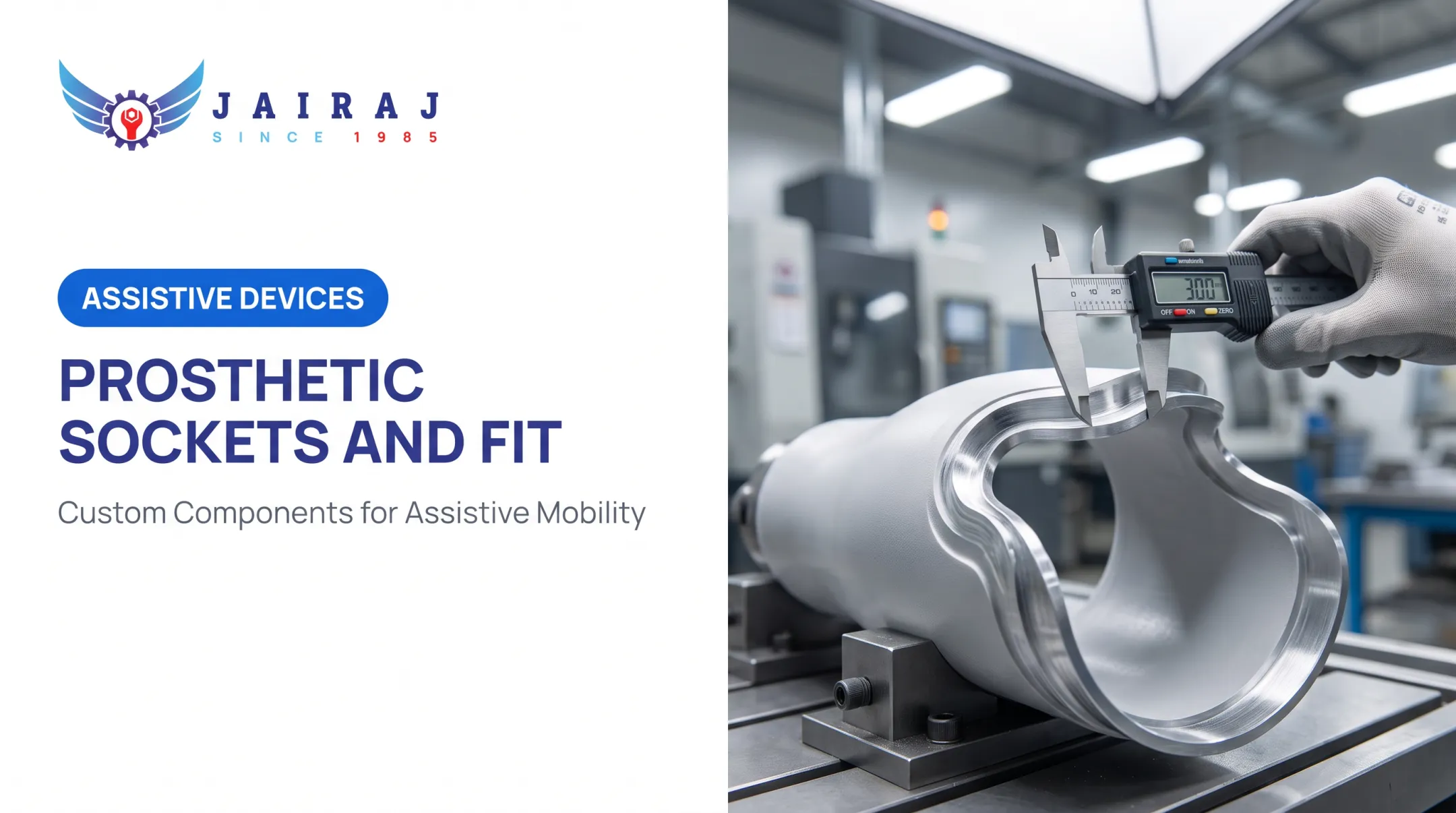
Inspect against a reference mold:
- Overall dimensions and critical anatomical features
- Trim-line location and edge quality
- Thickness distribution and surface defects
- Fit
Tie acceptance criteria to drawings, tolerances, customer requirements, and risk analysis, not invented limits.
Relevant methods include:
- ASTM D624 for tear strength
- ASTM D2240 for durometer hardness
- ASTM D2990 for creep
- ASTM D638 for tensile properties

Neither ISO 10328 nor ISO 22675 certifies inner-socket polymer properties. ISO 22675 addresses ankle-foot devices only. Testing should reflect real use, with documented methods, sample plans, and failure investigations.
Documentation and change control
Request these controls from your supplier:
- Material certificates and lot traceability
- Production records and inspection reports
- Nonconformance handling
- Written change-notification agreements
Material or processing changes can affect biological evaluation.
For US manufacturers, regulatory scope depends on the article. A thigh socket, external component, is Class I and exempt from premarket notification, but 21 CFR 890.3420 still leaves records and complaint-file obligations. ISO 9001:2015 is a generic quality standard. It does not prove FDA compliance, so ask for the specific documents you need.
How to Choose and Qualify a Preform Supplier
Technical and manufacturing capability
A buyer checklist:
- Polymer expertise and thermoforming experience
- In-house tool room and CAD support
- Process controls and inspection equipment
- Testing capacity and prototype support
- Scalability and medical device experience
- Representative samples, drawings, tolerances, datasheets, and lot-to-lot consistency evidence
Application and commercial fit
Ask how the supplier handles:
- Custom geometry and design changes
- Minimum order quantities and lead times
- Packaging and replacement parts
- Tooling ownership
The supplier should also review the full use case: outer socket, forming method, skin contact, suspension, cleaning, service life, and target market.
Where Jairaj Group fits
Jairaj Group, operating since 1985, is a custom polymer-component manufacturer with precision injection molding and thermoforming. Capabilities include in-house tool rooms, PLC-controlled machinery, testing and documentation, ISO 9001:2015 certification, and global exports.

Tooling services cover design-for-manufacturability reviews, prototype and pre-production tooling, and mold trials and correction.
Jairaj builds custom polymer components rather than a catalog flexible socket preform, manufactures in India, and holds ISO 9001:2015. Confirm any device-specific regulatory approvals your U.S. market requires. The company suits application review, prototyping, tooling, and production discussions for qualified medical device projects. Share your design and material requirements to request a technical assessment.
Frequently Asked Questions
What is a flexible inner prosthetic socket preform?
It is a shaped or semi-finished polymer component used to produce a flexible inner socket. It is not the complete prosthetic socket.
How is a preform different from a flexible inner socket or liner?
A preform is a manufacturing starting point. An inner socket or liner is the formed, finished component intended for use within a prosthetic system.
What materials are used for flexible inner socket preforms?
Common options include EVA, EVA with silicone, silicone-free EVA, and PE copolymers. Selection depends on fit, forming, skin contact, and performance needs.
Are flexible inner sockets suitable for every prosthetic user?
No. Suitability depends on anatomy, activity, limb condition, suspension, socket design, and clinical assessment.
How are flexible socket preforms customized?
Through CAD or mold geometry, material and thickness choice, trim lines, reliefs, windows, forming, and trimming. Final evaluation happens with the outer socket.
What should a medical device manufacturer ask a preform supplier?
Ask for material documentation, tolerances, tooling and testing details, traceability, change control, quality records, and applicable regulatory evidence. Also ask about prototypes, capacity, and technical support.