
Introduction
Losing a hand, finger, or arm changes more than function. It changes how you see yourself in the mirror. Cosmetic prosthetic hands and arms exist to restore that visible shape, proportion, and appearance, whether the loss happened through amputation, injury, or a congenital limb difference.
Many people assume every prosthetic hand is built to grip and lift. That's not true. Cosmetic devices are generally passive, prioritizing a natural look, comfort, and simplicity over powered movement. Some still offer light support for stabilizing objects, but grasping isn't their job.
This guide covers device types, materials, personalization options, fitting steps, benefits, limitations, costs, and maintenance. You'll also find questions worth raising with a qualified prosthetist before you commit to a device.
Key Takeaways
- Cosmetic hands and arms primarily replicate appearance; they're not built for active grasping
- Options span from prefabricated covers to fully customized silicone restorations
- Fit, suspension, and residual-limb health matter as much as looks
- U.S. pricing and insurance coverage vary widely by device type and payer
- A prosthetist can help you choose among cosmetic, body-powered, and myoelectric options based on your goals
What Are Cosmetic Prosthetic Hands and Arms?
A cosmetic prosthetic hand or arm is an external device that replaces the visible form of a missing or differently shaped upper limb. These devices are passive: they don't independently open, close, or move the way a powered prosthesis does.
Terms That Sound Similar But Aren't
These words get used interchangeably, but they shouldn't be:
- Cosmetic restoration – an appearance-focused replacement, often reproducing skin tone, freckles, and hair
- Passive prosthesis – any device without actively controlled joint movement, including manually adjustable designs
- Cosmetic cover or glove – an outer component, not necessarily a complete device (Ottobock's passive hand, for example, requires a separately ordered glove)
- Functional prosthesis – function isn't exclusive to powered devices; passive restorations can still stabilize objects during two-handed tasks
Where These Devices Apply
Cosmetic options exist across nearly every level of limb loss: partial fingers, partial hands, wrist disarticulation, below-elbow (transradial), and above-elbow (transhumeral) loss.
The right device type depends heavily on the residual limb's length and condition, so this is a conversation for your prosthetic provider, not a generic chart.
Appearance goals typically include:
- Restoring visual symmetry with the opposite limb
- Matching proportions, skin tone, and surface details like veins or wrinkles
- Recreating fingernails, hair, and even freckles
- Supporting whatever level of realism the person actually wants (some prefer a more visibly mechanical look)
Compared with body-powered or myoelectric prostheses, cosmetic devices skip the harnesses, cables, and charging routines. That simplicity is the trade-off for giving up active movement.
A cosmetic prosthesis can still serve as a stabilizing surface, holding paper down or steadying a bag, but it won't replicate natural dexterity, sensation, or grip strength.
How Are Cosmetic Prosthetic Hands and Arms Made and Fitted?
Fitting starts with an assessment. A prosthetist reviews the limb difference or amputation level, skin condition and sensitivity, range of motion, and what the person actually wants day-to-day from the device.
Capturing the Shape
Providers use measurements, impressions, or 3D scans, often comparing the affected side against the opposite hand or arm to guide proportions. Ottobock, for instance, typically requests casts of both sides along with photographs and nail details. Confirm the exact process with your provider, since methods vary by clinic.
Materials and Customization
| Material | Typical Use |
|---|---|
| Medical-grade silicone | Custom lifelike restorations with layered color and texture |
| PVC | Prefabricated cosmetic gloves |
| Foam over a metal skeleton | Lightweight structural hands with a flexible skin |
| Rigid plastic | Structural base components |
Customization can go deep: skin-tone matching, freckles, veins, scars, tattoos, hand position, even hand-painted acrylic nails. A highly individualized silicone restoration looks very different from a prefabricated, less customized cover, and the price reflects that gap.
Suspension and Attachment
How the device stays on depends entirely on anatomy. Options include:
- Anatomical fit using suction
- Friction-based interfaces
- Liners, sleeves, or straps
- Full harness integration with a socket

Why Component Quality Matters
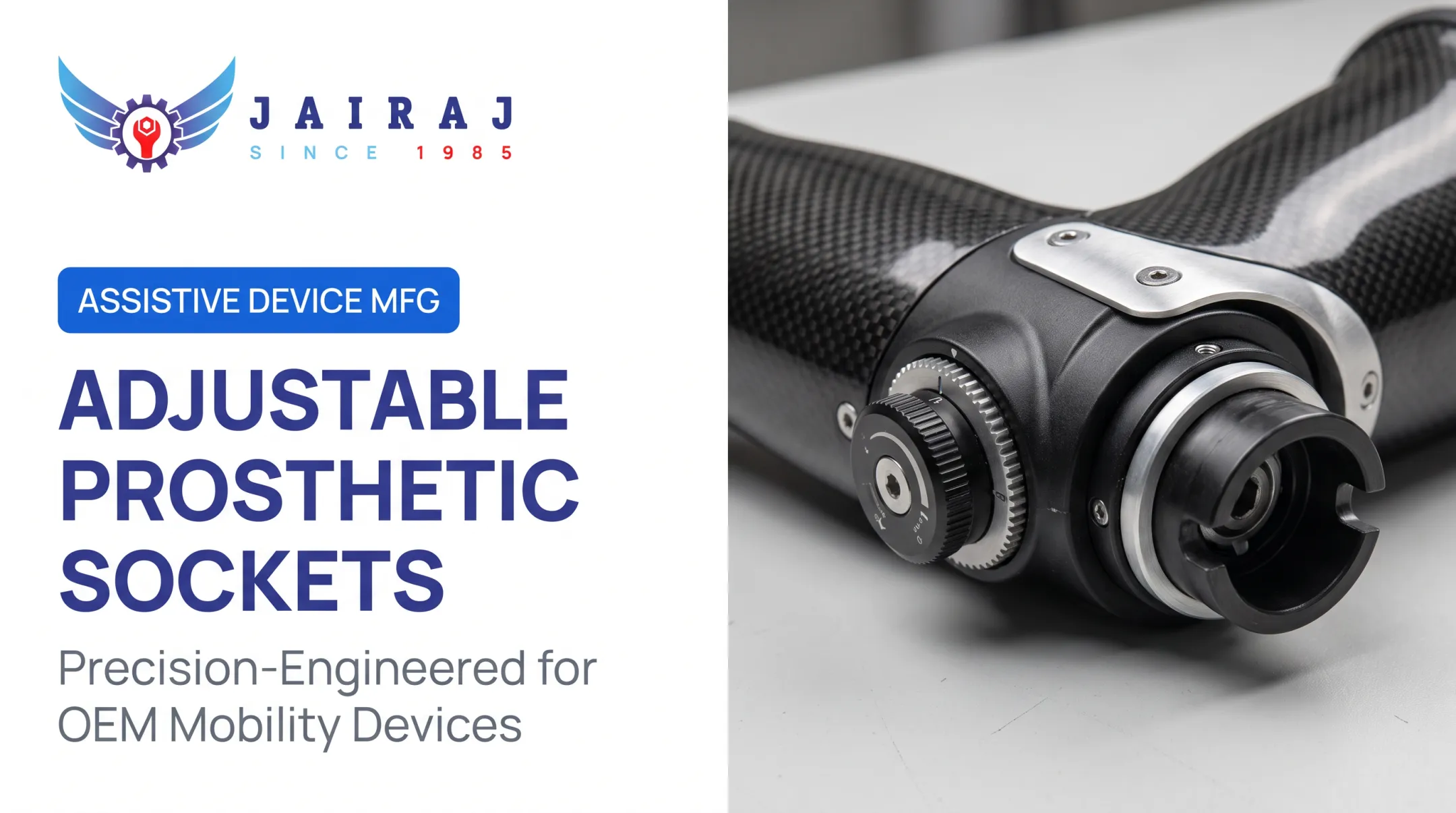
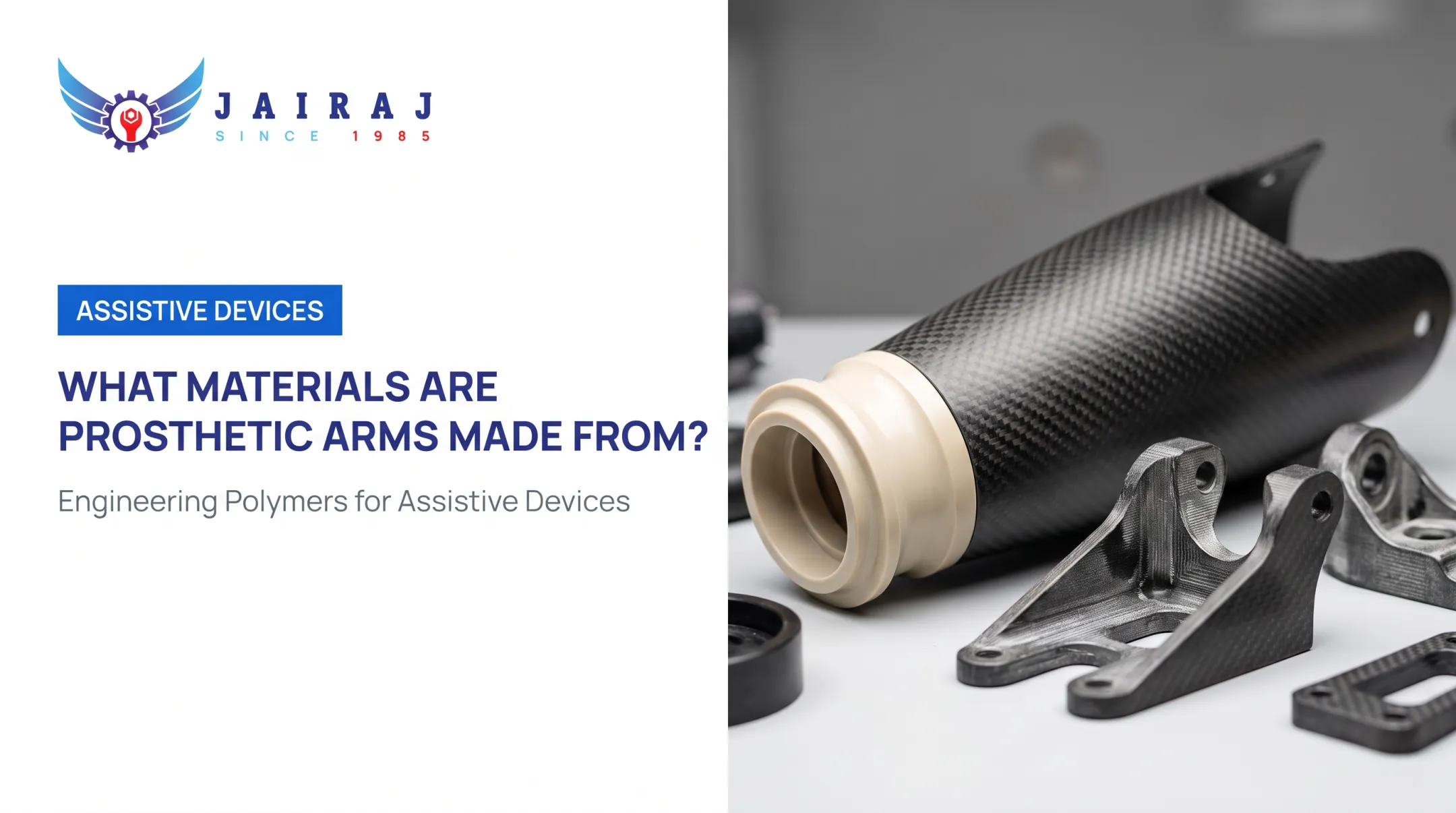
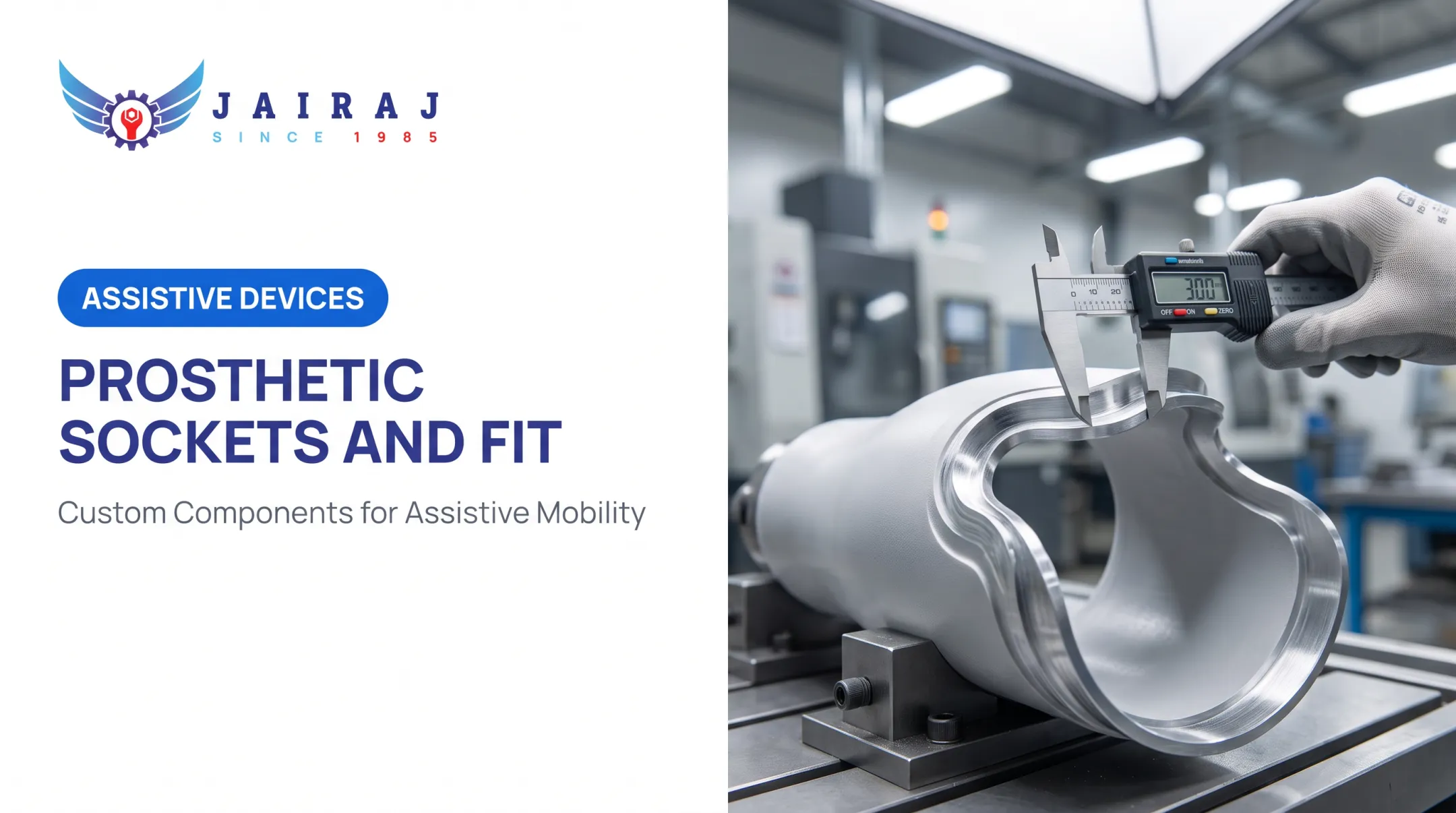
Behind every finished prosthesis sit smaller polymer parts: liners, structural supports, interface components. For manufacturers supplying this space, dimensional accuracy, material consistency, and documented biocompatibility aren't optional extras.
Jairaj Group manufactures polymer components for medical and assistive-device applications. Production uses injection molding, thermoforming, and CNC machining under ISO 9001:2015 certification, with dimensional verification and material testing built into each run.
Jairaj Group doesn't produce finished prosthetic devices or perform clinical fittings. It supplies the engineered components that device makers and prosthetists build from. For OEMs sourcing polymer parts for wearable or assistive medical devices, that distinction matters when evaluating suppliers.
What Are the Benefits and Limitations of Cosmetic Prosthetic Hands and Arms?
Where These Devices Help
The clearest benefit is appearance. A natural-looking silhouette can restore a sense of symmetry and give someone more control over how visible their prosthesis is in social or work settings. That said, the psychological impact isn't universal; it depends on the person.
Practical advantages include:
- Lightweight design with no routine charging
- Lower maintenance than electronic prostheses
- A usable surface for stabilizing or carrying light objects
- Possible comfort or balance gains when the device buffers a sensitive residual limb (confirm clinically)
Where They Fall Short
Most cosmetic prostheses cannot grasp objects, move fingers independently, or provide touch sensation. That is the core trade-off, and it should be clear before you order one.
A 2023 PubMed-indexed study looked at 54 users of cosmetic silicone partial-hand prostheses. Nearly half wore the device daily, and most were satisfied with durability and ease of donning.
Comfort was a different story. A meaningful share reported dissatisfaction. Separate research on thumb prostheses found that over three-quarters of participants eventually stopped using theirs, citing fit, perspiration, and slippage as the main complaints.

Other practical challenges to expect:
- Heat and sweat buildup, especially with silicone
- Color or surface wear over time
- Damage from sharp objects, water, or chemicals
- Discomfort or skin irritation from a poor fit
- Occasional social reactions to highly realistic devices
If you need work-specific performance, heavy-load handling, or sports capability, talk that through with a prosthetist before ordering. A cosmetic device almost certainly won't meet those demands.
How Do You Choose and Care for a Cosmetic Prosthesis?
Start with your primary goal. Are you after the most realistic appearance possible, the lightest device, passive support, or just something comfortable enough for occasional wear? That answer shapes everything else.
Comparing Your Options
| Factor | Custom Silicone Restoration | Simpler Cosmetic Cover |
|---|---|---|
| Realism | Very high | Moderate |
| Price | Higher | Lower |
| Lead time | Longer | Shorter |
| Repairability | Limited | Easier |
| Durability | Variable, activity-dependent | Generally durable |
Questions to Ask Your Provider
- How will the device be suspended, and what's expected daily wear time?
- What cleaning products and drying methods are recommended?
- How do I inspect edges and attachment areas for wear?
- What's the typical replacement timeline for this specific device?
- What does the repair process look like if something tears?
Care Basics
Follow your provider's specific instructions. General guidance from manufacturers like Ottobock includes:
- Clean daily with mild soap and a soft brush
- Air-dry rather than using heat
- Avoid sharp objects, permanent ink, and petroleum-based lotions that degrade silicone
Stop wearing the device and contact your provider if you notice persistent pain, pressure marks, or skin breakdown.
Cost and Coverage
Total expense covers more than the device itself:
- Assessment and design
- Fabrication and fitting
- Socket work and adjustments
- Eventual replacement
According to Celerity Prosthetics' estimate, basic cosmetic arms in the U.S. run roughly $2,000 to $5,000, while myoelectric or bionic arms can reach $20,000 to $100,000 or more. Custom silicone hands aren't included in that range and typically cost more due to the hand-detailing involved.
Coverage varies significantly by payer. Per Medicare.gov's coverage guidance, Original Medicare Part B covers medically necessary artificial limbs under a doctor's order, with the beneficiary typically paying 20% of the Medicare-approved amount after the deductible.
Some insurers, including Aetna, classify custom silicone restorations as cosmetic and exclude them entirely. Always check your specific plan and device before ordering.

Before Your Prosthetist Appointment
Bring notes on:
- Intended activities and daily routine
- Preferred appearance and realism level
- Previous device experience, if any
- Known skin sensitivities
- Insurance details and budget range
- Whether a separate functional prosthesis makes sense alongside the cosmetic one
Frequently Asked Questions
How much does a prosthetic hand cost?
Cost depends on whether you're choosing a cosmetic or functional design, the materials and customization involved, and your insurance coverage. Research current U.S. pricing with your provider rather than relying on a single fixed figure.
Can you get prosthetic hands?
People with amputation, congenital limb difference, or partial hand loss may be candidates. Eligibility and the right device type still require assessment by a qualified prosthetist and medical team.
How do prosthetic hands stay on?
Common methods include custom-fit sockets, liners, suction or friction systems, sleeves, straps, and harnesses. The best approach depends on your limb anatomy and the specific device design.
What is the newest prosthetic hand?
"Newest" usually refers to myoelectric control, multi-articulating fingers, or sensory-feedback research, not cosmetic devices, which focus on appearance rather than movement. Compare options based on what's clinically appropriate for you, not just novelty.