
Introduction
The socket is where the body meets the machine. It's the single interface connecting a residual limb to the liner, suspension, pylon, knee, or foot. Fit shapes comfort, stability, and how much control a person actually has over their prosthesis.
Get it wrong, and the consequences show up fast: pain, pressure points, skin irritation, pistoning, and a socket that feels loose by afternoon even though it fit perfectly that morning.
These aren't rare complaints. One study of lower-limb amputees found that 63% reported at least one residual-limb skin problem in the preceding month, according to Meulenbelt's 2009 study.
This guide covers socket types, the fitting process, warning signs that need professional attention, and questions worth raising with your prosthetist.
Key Takeaways
- A socket must be custom-fitted to your residual limb, activity level, and suspension needs, not a generic shape
- Persistent pain, skin breakdown, numbness, or instability means calling your prosthetist, not adding more socks
- Fit changes throughout the day as limb volume shifts, and that's normal, not a personal failure
- Test sockets, liner swaps, and alignment checks are standard tools for dialing in fit over time
- Walking, stairs, and uneven ground can expose fit problems that standing still hides
Understanding Prosthetic Socket Fit and Function
A prosthetic socket is the custom-molded shell that encloses the residual limb. It's distinct from the liner (the cushioning layer against skin), the suspension system (what keeps the prosthesis attached), and the pylon, knee, or foot components below it.
The socket does three jobs simultaneously:
- Transfers load between body weight and the ground during standing, walking, and weight-bearing
- Maintains suspension, keeping the limb seated inside the socket during swing and stance phases
- Controls rotation, preventing the limb from twisting inside the socket during turns or uneven terrain
Load Distribution Shapes Comfort
How a socket distributes pressure determines whether skin stays healthy or breaks down. Patellar tendon bearing designs load pressure-tolerant tissue while relieving sensitive areas. Total surface-bearing designs aim for more even pressure across the whole limb, according to Dickinson's 2024 research.

Neither approach eliminates friction, shear, or heat buildup entirely, but good socket design manages all three.
Snug Versus Dangerously Tight
Fit isn't static. Residual-limb volume shifts throughout the day, during rehabilitation, after exercise, or with weight and muscle changes. A snug socket should feel supportive, not alarming.
Contact a prosthetist promptly if you notice:
- Numbness or tingling that doesn't resolve after removal
- Skin discoloration (blue, pale, or dark red patches)
- Pain that persists beyond normal adjustment
- Visible swelling above the socket's proximal edge
A socket can also feel acceptable while standing still and still fail you on stairs or uneven ground. That's why functional trials, not just static fit checks, matter so much during fitting.
Socket Types, Materials, and Suspension Options
Socket design depends on amputation level, residual-limb anatomy, tissue tolerance, and how active the user plans to be.
Common Lower-Limb Designs
| Design | Best suited for | Key characteristic |
|---|---|---|
| Patellar tendon bearing (PTB) | Transtibial amputations | Loads pressure-tolerant areas, relieves sensitive spots |
| Total surface-bearing (TSB) | Transtibial amputations | Distributes pressure more evenly across the limb |
| Hydrostatic | Transtibial amputations | Captures shape under even pressure; still needs local adjustment |
| Ischial containment | Transfemoral amputations | High, rounded trim lines contain the ischial tuberosity for stability |
Upper-limb sockets face different demands entirely. Secure suspension, full range of motion, and control precision for body-powered or myoelectric systems all matter. For myoelectric users specifically, socket movement that shifts an electrode away from skin disrupts control signals, a problem unrelated to suspension alone.
Construction Trade-Offs
- Fixed geometry: Shape is captured once and doesn't change; dependable, but doesn't adapt to volume shifts
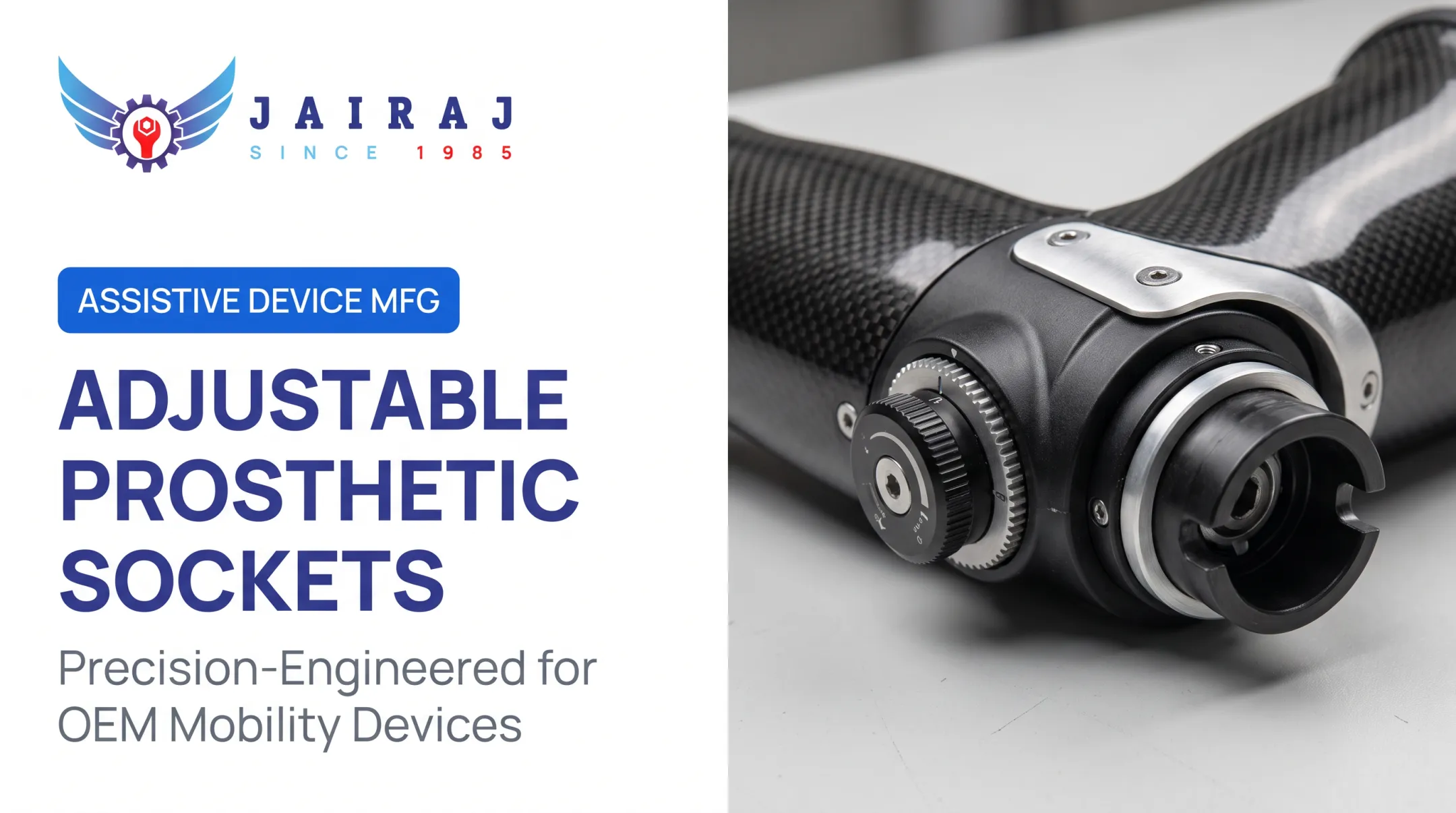
- Adjustable volume: Uses mechanisms like inflatable panels or circumferential straps to manage changing limb size; added mechanisms can mean added maintenance
- Flexible inner, rigid outer: Combines a flexible inner socket with a shorter rigid outer shell for stability with some give
Liners, socks, sheaths, and suspension sleeves support cushioning and volume management, but they don't replace a properly designed socket. A sock stack can mask a small volume change temporarily; it can't fix a socket that's fundamentally misshapen.
An OEM Manufacturing Perspective
Behind every socket, liner, and prosthetic component is a supply chain of material and fabrication decisions. Device manufacturers evaluate polymer suppliers on consistency, molding precision, and documented quality control, since a socket's performance starts with the material it's built from.
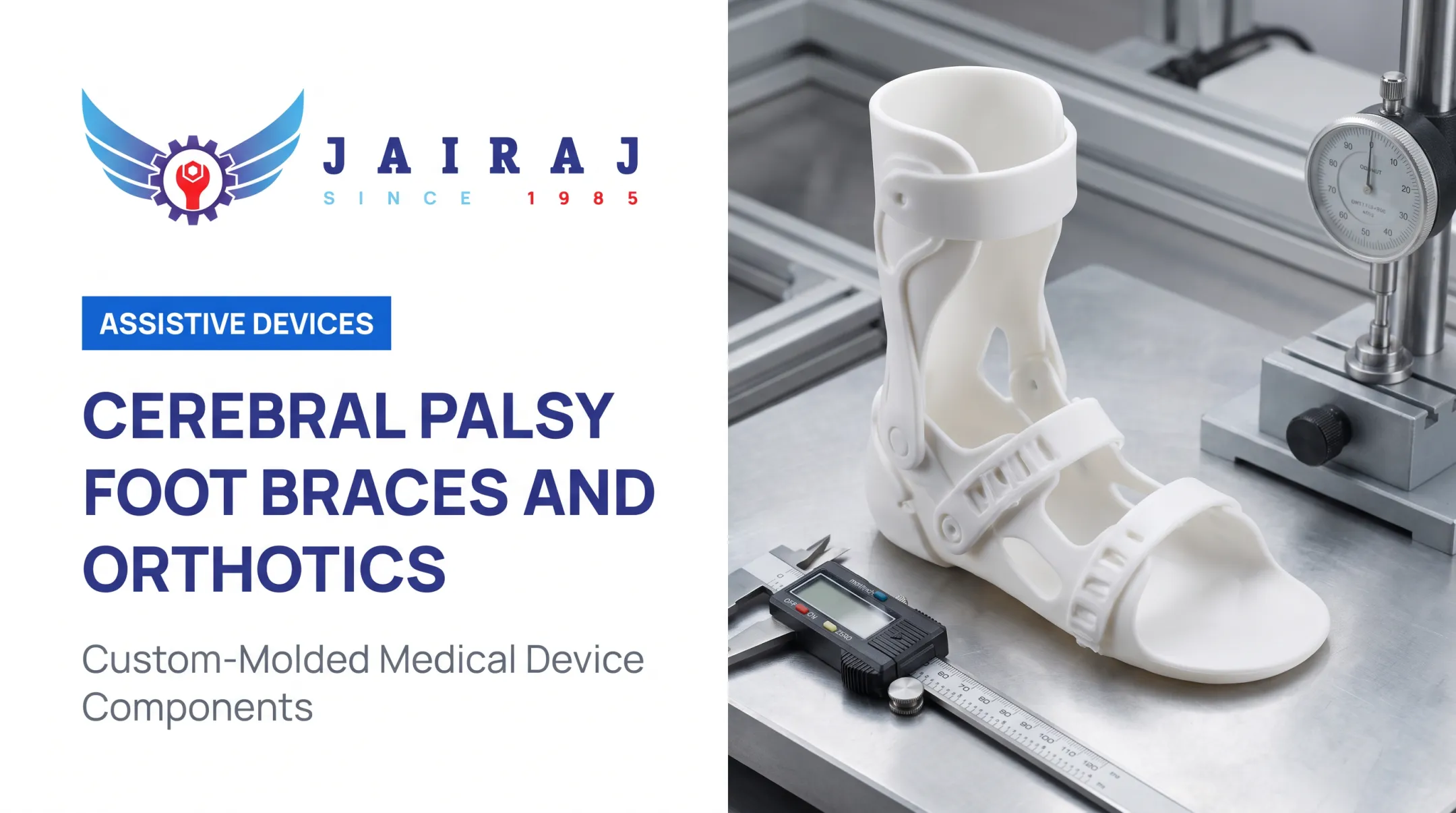
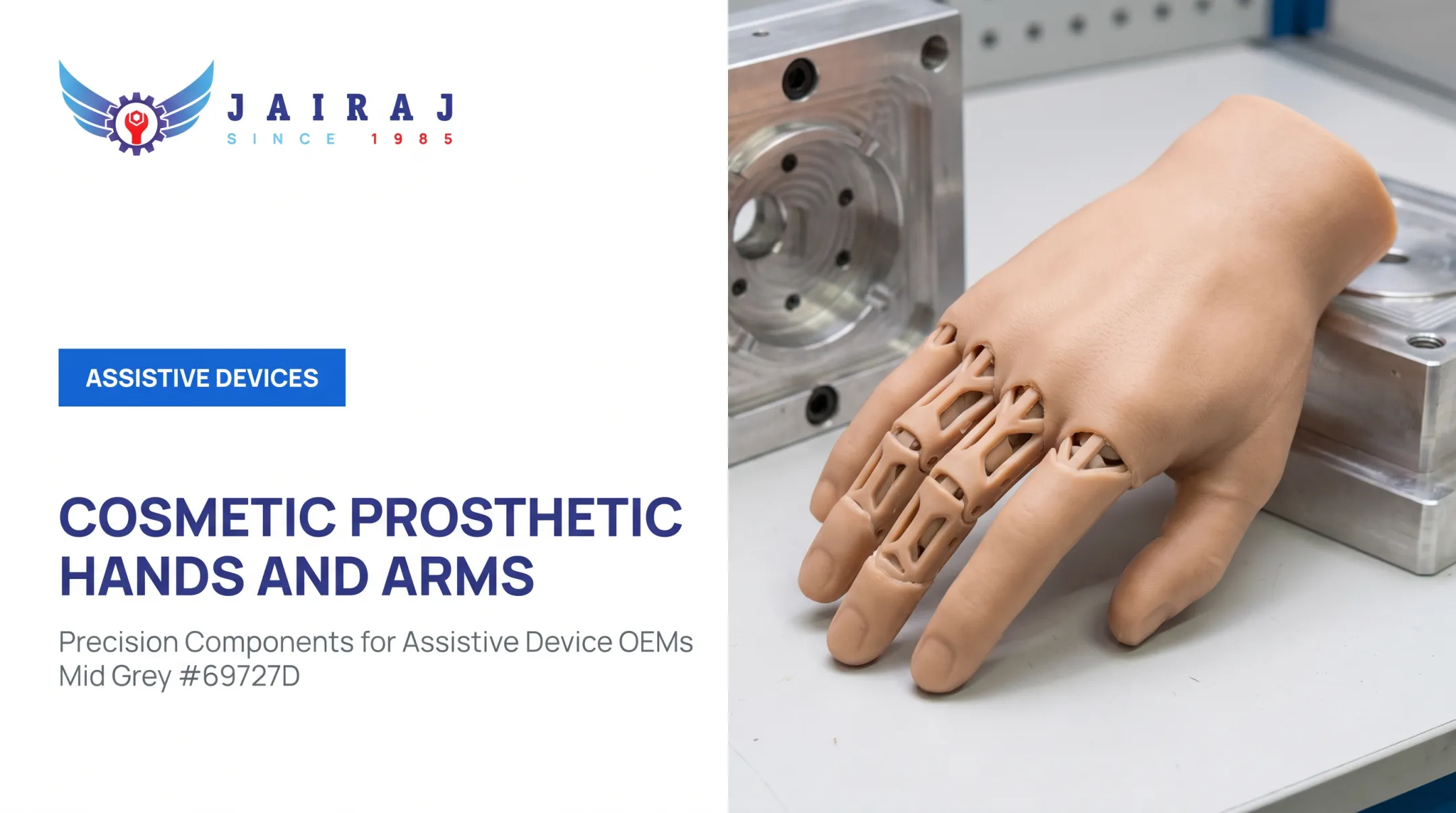
Jairaj Group, an ISO 9001:2015-certified manufacturer, works with medical and assistive device OEMs on this side of the equation: injection molding, thermoforming, in-house tooling, and engineering polymer selection (including materials like PEEK and nylon) for components used in prosthetic and orthotic devices. This is a manufacturing and materials role, not clinical fitting, which always remains the job of a certified prosthetist.
The Prosthetic Socket Fitting and Adjustment Process
Fitting spans more than one appointment. Each step is built to catch problems before they become permanent.
- Assessment: The prosthetist reviews your residual limb, surgical history, skin condition, activity goals, and existing components.
- Shape capture: Traditional plaster casting or digital scanning produces the shape used for an initial socket model. Neither method is universally better; each has trade-offs in speed and precision.
- Test socket fitting: A transparent or temporary check socket lets the clinician observe pressure areas, alignment, and limb contact before anything is finalized.
- Functional trials: You may sit, stand, walk, climb stairs, or change direction during fitting, depending on your clinical readiness.
- Adjustments: Trim lines, relief areas, alignment, liner choice, or socket volume get refined based on what trials reveal.
- Delivery and follow-up: Gait training, skin monitoring, and wear-time checks continue after the socket is finished.

Temporary Versus Definitive Sockets
A temporary socket accommodates early volume changes while your limb stabilizes. A definitive socket comes later, once your limb and clinical needs settle. Neither is guaranteed to last indefinitely; both need monitoring.
Questions Worth Asking at Fitting Visits
- What symptoms should I expect during the break-in period, and what's not normal?
- When should I stop wearing the device and call you?
- How do I manage volume changes day to day?
- At what point would you consider a new test socket or replacement?
Common Prosthetic Socket Fit Problems and What to Do
Socket problems rarely show up as a single symptom. Watch for a cluster of warning signs:
- Persistent or worsening pain
- Redness that doesn't fade within 20 minutes of removal
- Blisters, open skin, or distal-end pressure
- Numbness, excessive sweating, or odor
- Pistoning (limb sliding up and down) or rotation inside the socket
- Difficulty donning, or reduced confidence while walking
Fit problems are a major reason users abandon their prostheses. Among upper-limb users who stopped using a prosthesis, 70.3% cited poor fit or discomfort as a reason, according to Resnik's 2023 study.

What's Behind Skin Irritation
Most skin breakdown traces back to:
- Friction and shear
- Poor load distribution
- Liner problems
- Heat, moisture, or trim-line contact
Any of these warrants a professional look, not a home fix.
Volume Changes, Pistoning, and Alignment
- Looseness or tightness: Clinician-approved socks or liners can manage small volume shifts temporarily while the underlying fit gets reviewed
- Pistoning or rotation: Usually points to insufficient containment or suspension; the prosthetist will assess socket shape, suspension hardware, and gait
- Alignment issues: Altered gait, knee or hip strain, or back pain can trace to alignment, not just socket shape. Never adjust alignment settings yourself
Adjustable-volume sockets help some users with recurring volume swings, but the added mechanisms bring their own maintenance needs and aren't right for everyone.
Safety note: Never cut, heat, drill, pad, or otherwise modify a socket at home. Don't keep wearing it over open wounds or through severe pain without clinical guidance.
Socket Care, Maintenance, and Replacement
Daily care keeps both skin and equipment in good shape.
Cleaning routine:
- Wipe the inner socket daily to remove sweat and skin particles
- Clean liners after each day of wear, rinse thoroughly, and let them dry fully
- Inspect liners and socks daily for holes, thinning, or unusual wear patterns
Liners and socks are consumables. They stretch, crack, lose elasticity, or stop managing volume effectively over time. Sock thickness also changes with normal use in ways that do not track neatly with age. Visual inspection matters more than a calendar date.
Replacement triggers for the socket itself:
- Structural cracks or visible damage
- Persistent fit problems despite adjustments
- Major residual-limb changes
- Repeated unsuccessful adjustment attempts
- Revision surgery or a shift in functional needs
Lifespan varies with materials, activity level, body changes, and how well the device is maintained. There's no single universal replacement interval, so lean on your prosthetist's guidance rather than a fixed timeline.
Daily self-check:
- Skin condition
- Pain level
- Suspension security
- Unusual movement
- Visible socket damage
- Any change from your usual fit and feel
Frequently Asked Questions
What is a prosthetic socket?
A prosthetic socket is the custom-molded interface between a residual limb and the rest of a prosthesis. It handles comfort, suspension, load transfer, and control during movement.
How do prosthetic sockets work?
The socket contains the residual limb and distributes body weight and movement forces across it. It connects to suspension systems and prosthetic components to enable controlled walking or reaching.
What are the different types of prosthetic sockets?
Lower-limb designs include patellar tendon bearing, total surface-bearing, hydrostatic, and ischial containment sockets. Upper-limb designs vary by suspension and control needs; the right choice depends on anatomy, amputation level, and activity goals.
What is a prosthetic test socket?
A test socket is a temporary, often transparent, fitting device used before final fabrication. It lets the clinical team check pressure areas, alignment, suspension, and movement.
Are adjustable prosthetic sockets available?
Yes. Adjustable-volume sockets use mechanisms such as inflatable panels to handle changing limb volume. A prosthetist can determine whether one matches your needs and maintenance preferences.
How much does a prosthetic socket cost?
Pricing varies with socket design, materials, suspension type, fabrication method, and insurance coverage. Ask your prosthetic provider for an itemized estimate before moving forward.