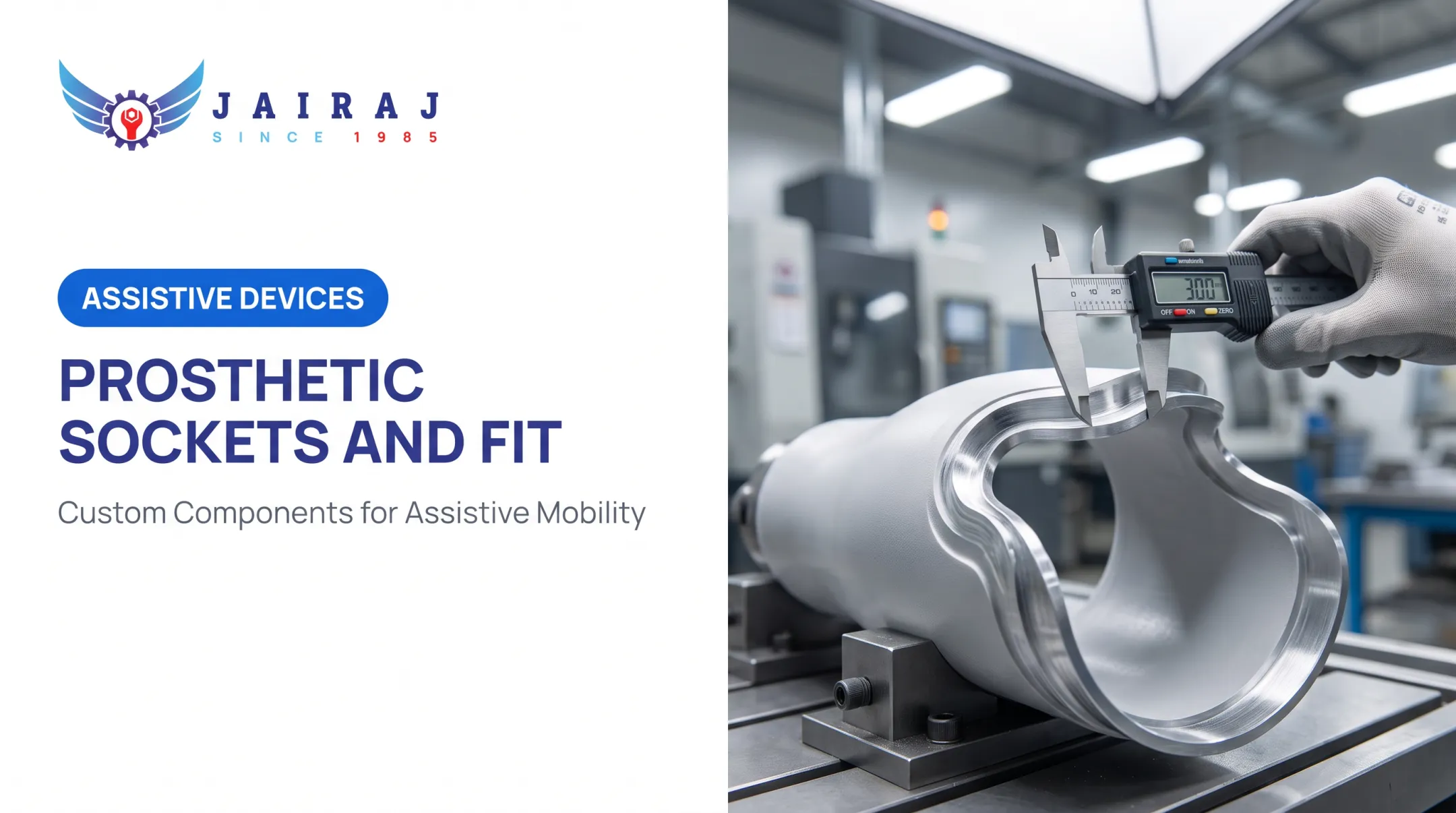

The socket needs a precise, comfortable fit. The frame needs strength without excess weight. The terminal device needs to survive years of gripping, twisting, and daily wear. Material choice directly affects comfort, durability, appearance, and how much maintenance an arm will eventually need.
This article breaks down where common materials are used, how body-powered and myoelectric designs differ in their material needs, and what patients and clinical teams should weigh when evaluating options.
Key Takeaways
- Prosthetic arms combine multiple materials because sockets, frames, joints, liners, and covers all have different jobs
- Thermoplastics and engineering polymers shape custom sockets and covers; carbon-fiber composites and metals add structural strength
- Silicone, polyurethane, and soft elastomers cushion the residual limb and improve skin contact
- Titanium, aluminum, and stainless steel appear in joints, connectors, and fasteners
- The right material mix depends on fit, activity level, skin sensitivity, and a qualified prosthetist's assessment
What Are Prosthetic Arms Made Of, and Why Do Materials Matter?
A prosthetic arm is a customized assistive device that replaces part or all of an upper limb. Depending on the design, it can include several distinct parts:
- Socket - the custom-fitted receptacle connecting the residual limb to the device
- Suspension system - holds the prosthesis in place (harness, suction, or anatomical)
- Joints and wrist - allow movement and positioning
- Terminal device - the hand, hook, or task-specific tool
- Liner - the soft interface against the skin
- Cosmetic covering - the outer appearance layer
Each component has different material requirements. A socket demands precision and rigidity. A liner needs softness and flexibility. A terminal device needs to hold up to repeated mechanical stress.
Control type matters here too, but it is often misunderstood. Body-powered prostheses use cables and a harness operated by body movement. Myoelectric designs use battery power and muscle signals to drive motors, according to AAPM&R's clinical overview. Passive devices skip moving mechanisms entirely and focus on appearance or light support.
These are functional categories, not material categories. A body-powered arm and a myoelectric arm might both use carbon-fiber sockets or polymer frames. What changes is which additional components, like batteries and sensors, get added on top.
Material selection ultimately comes down to a clinical and engineering process: assessing the residual limb, skin condition, functional goals, and how much customization the design requires.

Common Materials Used in Prosthetic Arms
Modern prosthetic arms typically combine several material groups, each selected for a specific balance of strength, flexibility, weight, and appearance.
Thermoplastics and Engineering Polymers
Polypropylene, polyethylene, polycarbonate, acrylics, and similar engineering polymers show up throughout prosthetic arms, in sockets, housings, covers, and other molded parts.
Heat-formable polymers like EVA are used for flexible diagnostic sockets, allowing technicians to shape, reshape, and even heat-weld components during fitting. This supports:
- Custom shaping during the fitting process
- Relatively low weight for all-day wear
- Easier fabrication and adjustment compared to rigid composites
Acrylic lamination resins are also common in socket construction, offering a quick setting time during fabrication.
Polymer formulations still vary widely in stiffness, heat sensitivity, and long-term dimensional stability. A rigid structural socket and a soft cushioning layer may both be "polymer" while behaving completely differently.
Carbon-Fiber and Other Composite Materials
Carbon-fiber composites combine reinforcing fibers with a resin matrix, producing components that are lightweight, rigid, and strong. In upper-limb devices, they're often used in structural sockets where stiffness without bulk really matters.
A technician may add carbon-fiber tissue to a socket laminate and adjust the number of layers based on a patient's specific support needs. That layer-by-layer control is why finished composite sockets can match a patient's support needs so closely.
Composites bring real advantages:
- High strength-to-weight performance
- Resistance to fatigue over repeated use
- Thin profiles that still hold up structurally
Trade-offs matter as well. Carbon fiber is strong and lightweight, though it can cost more than materials with similar mechanical properties, according to a PMC-published materials review.
Fabrication also demands care: carbon tissue can unravel during cutting, and lamination must stay free of air bubbles. Compared with thermoplastics, composites usually cost more and need specialized skills, but they give higher-activity users a stiffer, lighter structure.
Metals and Metal Alloys
Titanium, aluminum, and stainless steel handle the mechanical heavy lifting: connectors, fasteners, wrist and elbow mechanisms, joint axles, and structural supports.
No single metal wins across the board. Each brings a different combination of strength, weight, and cost:
| Metal | Common role | Notable trait |
|---|---|---|
| Titanium | Wrist bodies, structural joints | Strong, relatively light, corrosion resistant |
| Aluminum | Light-duty hooks, wrist housings | Low weight, easy to machine |
| Stainless steel | Heavy-duty hooks, bushings | Wear resistant, heavier than aluminum |
Manufacturers often offer the same wrist component in multiple metal options, letting prosthetists match the device to activity level and budget rather than defaulting to one "best" metal.
Mixing dissimilar metals in a device exposed to moisture can trigger galvanic corrosion, where one metal degrades faster through electrical contact with another. Insulating washers or sleeves between dissimilar metal parts help prevent this, so component compatibility matters as much as the metals themselves.
Silicone, Polyurethane, and Other Soft Materials
The interface between a rigid prosthesis and living skin is the most important comfort factor in the whole device. That is where silicone, polyurethane, and thermoplastic elastomers (TPE) come in.
These soft materials appear in:
- Liners and cushions
- Suspension sleeves
- Seals and flexible covers
- Skin-contact surfaces
Silicone liners can cushion the residual limb and reduce shear forces during movement. TPE liners offer similar heat-moldable flexibility for a more individualized fit. Both materials need regular attention, though. Sweat, heat, and skin sensitivity all affect how well a liner performs over a full day of wear.
A soft liner genuinely improves comfort, but it cannot fix an incorrectly fitted socket. Persistent pain, redness, or irritation points to a fit or clinical issue, not just a liner swap, and should go back to the prosthetist for review.
Electronics, Batteries, and Cosmetic Coverings in Myoelectric Arms
Myoelectric prostheses add a whole additional material layer on top of the structural components: batteries, motors, sensors, wiring, and circuit boards.
These parts need protection from everyday hazards. Protective plastic housings and seals shield electronics from dust, moisture, and impact, but not every myoelectric device is fully waterproof. Always check claims against the manufacturer's specifications.
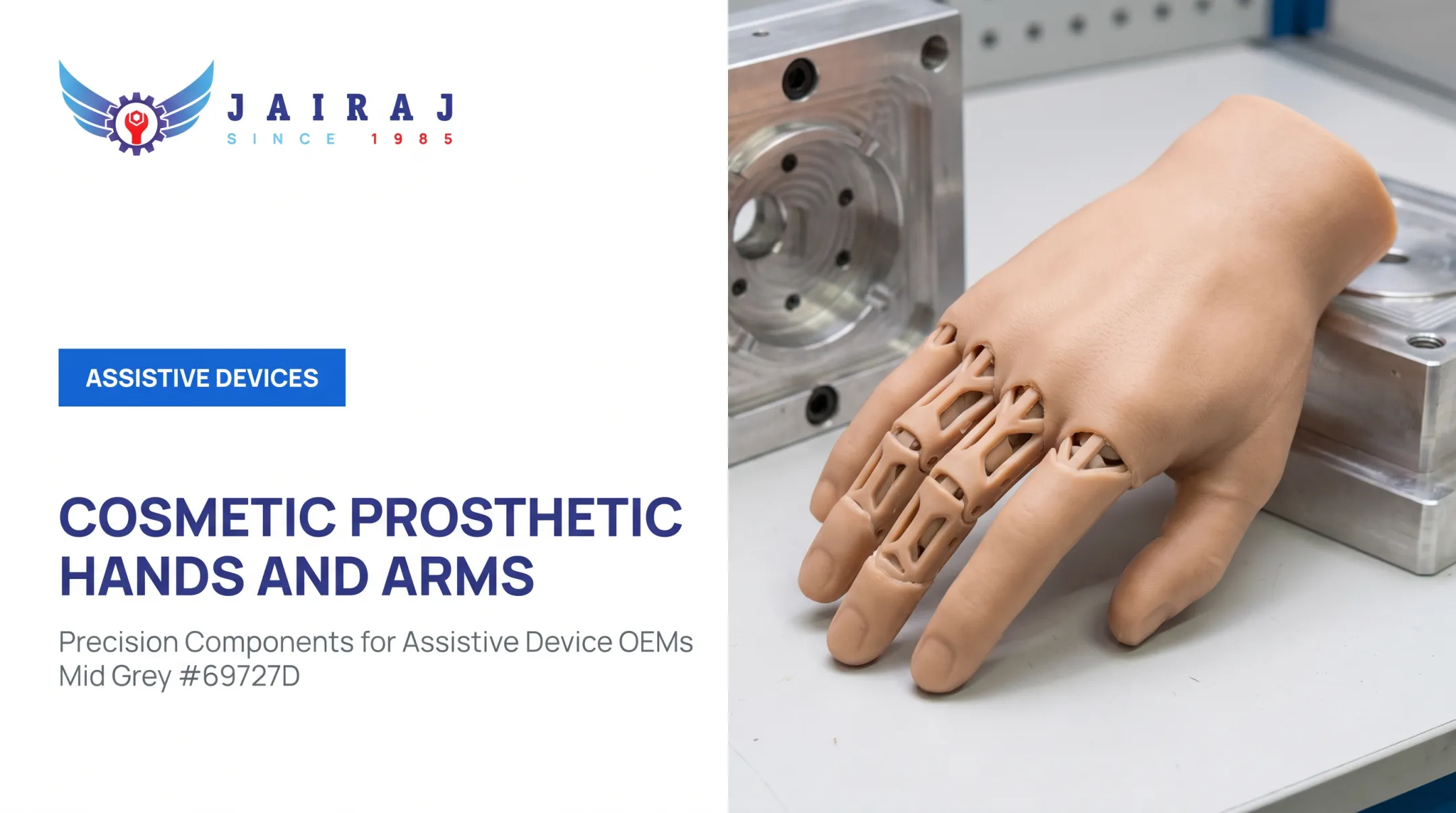
Cosmetic coverings add another material consideration entirely. Silicone skins and flexible polymer covers create a natural appearance while also protecting the mechanical components underneath. Advanced features, like multi-articulating hands with individual finger motors or sensor-based pattern recognition, introduce their own engineering and maintenance needs that go well beyond whatever material the socket is made from.

How to Choose the Right Materials for a Prosthetic Arm
There's no single "best" material for every user. The right combination depends on clinical needs, lifestyle, and what the prosthesis actually needs to do day to day.
Activity Level and Intended Use
A desk-based professional and a construction worker need very different arms. Heavy manual work, sports, water exposure, and repetitive motion all push toward tougher, more impact-resistant materials, sometimes at the cost of added weight.
Fit, Comfort, and Residual-Limb Condition
Socket fit, pressure distribution, and liner softness all matter more than any single material spec. Sweat management, ventilation, and skin sensitivity need attention too. Residual-limb volume can shift over time and change how a once-perfect socket fits.
Weight and Energy Expenditure
Lighter devices generally mean less fatigue during a full day of wear. That said, batteries, motors, and structural reinforcement in advanced myoelectric arms add weight that isn't always avoidable. Function and load pull in opposite directions here.
Durability, Maintenance, and Environment
Moisture, heat, dust, sunlight, and repeated cleaning all take a toll on materials differently. A body-powered device generally demands less frequent adjustment and maintenance than a myoelectric one, based on findings from a systematic literature review comparing the two control types.
Budget, Replacement, and Customization
Advanced composites, specialized alloys, and electronic components add cost and complexity. Simpler polymers tend to be easier and cheaper to fabricate, adjust, or replace, which matters for users who anticipate frequent socket changes.
Professional Assessment and Component Compatibility
None of this happens in isolation. A prosthetist evaluates the residual limb, chosen control method, suspension system, and activity goals together. They then check that the materials selected for each component work well with one another before finalizing a design.

What to Check Before Finalizing Materials
Don't choose a material just because it's lightweight, strong, cheap, or technologically impressive. Assess the full picture: comfort, function, maintenance, and durability together.
Before finalizing, confirm:
- Skin compatibility - Is the material appropriate for direct or near-skin contact given any known allergies or sensitivities?
- Environmental fit - Will it hold up against the user's actual daily exposure to moisture, heat, or chemicals?
- Adjustability - How will the socket and liner be modified as the residual limb changes?
- Replacement plan - What's the process when a worn component needs swapping out?
- Electronic protection - How are sensors, batteries, and wiring shielded and serviced?
- Documentation - Does the manufacturer provide testing data and certification?
For prosthetic device manufacturers and OEMs sourcing components, due diligence focuses on production controls:
- Polymer consistency batch to batch
- In-house tooling capability for custom molds
- Dimensional control and testing procedures
- Traceability and repeatable production at volume
This is where a component manufacturer's certifications matter. Jairaj Group, an ISO 9001:2015-certified manufacturer based in India, produces precision plastic components, including sockets, liners, and covers, for medical device and assistive equipment manufacturers. The company supplies OEMs across global markets.
When evaluating a production partner for prosthetic components, match certifications, documentation practices, and tooling capability to the applicable medical device requirements.
Conclusion
Prosthetic arms are assembled, not molded from a single substance. Polymers shape custom sockets and covers. Carbon-fiber composites add strength without bulk. Metals handle joints and connectors. Soft elastomers cushion the skin interface. Electronics and cosmetic coverings round out myoelectric designs.
The right combination always comes back to the same factors: fit, comfort, activity level, control technology, environment, and a qualified prosthetist's professional judgment. No material wins on its own merits alone.
Frequently Asked Questions
What materials are most commonly used in prosthetic arms and legs?
Polymers, carbon-fiber composites, metals like titanium and aluminum, and silicone or polyurethane liners all appear across prosthetic devices. The exact combination varies by component and by which limb is being replaced.
What is the best material for a prosthetic arm?
There's no universal best material. The right choice depends on socket fit, activity level, comfort needs, control system, durability requirements, and a prosthetist's clinical assessment.
What metals are commonly used in prosthetic arms?
Titanium, aluminum, and stainless steel are the main options, used in wrist bodies, joints, connectors, and fasteners. Titanium offers strength with lower weight, aluminum suits lighter use, and stainless steel handles heavy-duty demands.
What are the main types of prosthetic limbs?
The three main categories are passive, body-powered, and externally powered (myoelectric) prostheses. These describe function and control method, not a specific material used throughout the device.
What is the newest technology in prosthetic arms?
Recent developments include multi-articulating myoelectric hands, pattern-recognition control, targeted muscle reinnervation, and 3D-printed components using materials like laser-sintered nylon. Availability still varies by manufacturer and clinical setting.
Why do some people not use a prosthetic hand?
Comfort, weight, fit, and limited functionality are common reasons. In a 2019 multicenter study of upper-limb prosthesis users, 16 of 174 participants were nonusers, and 81% of them cited limited functionality as a factor.