
Introduction
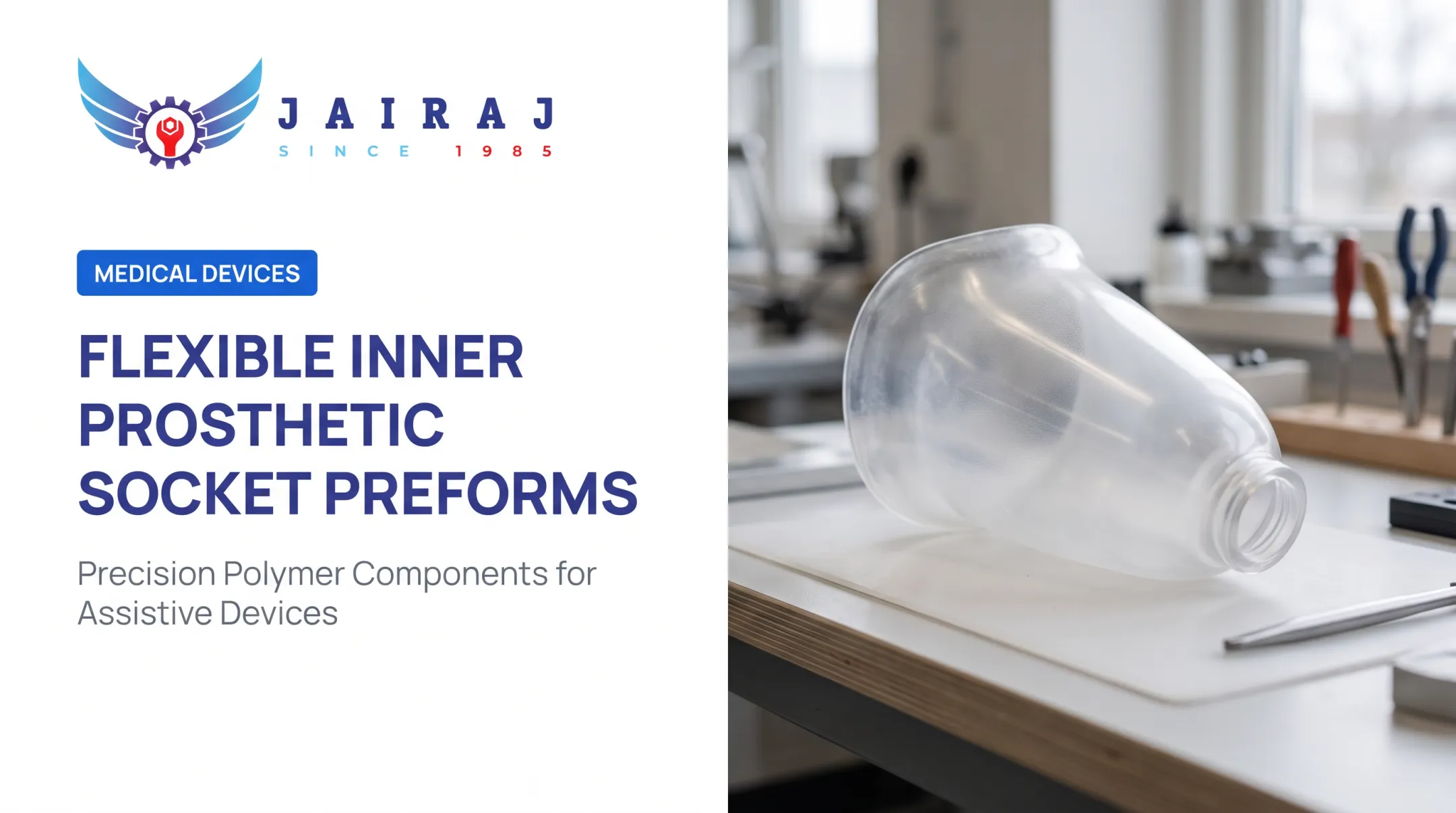
The socket is the custom-fitted part that connects a residual limb to the rest of a prosthesis. Its fit, strength, and comfort shape every step a person takes.
Carbon fiber is a lightweight reinforcement used in resin-based composite sockets. But the material alone does not decide comfort, durability, or walking performance. In one 2023 static-strength study, 16 of 23 laminated sockets met the target load, which shows how much construction matters.
This guide covers construction, benefits, limitations, fabrication, material comparisons, cost, and questions for your prosthetist or supplier.
Key Takeaways
- Carbon fiber gives a strong, light structure, but stiffness, brittleness, and repairability matter too.
- Comfort depends on limb geometry, suspension, liner, and alignment, not just material.
- Judge fabrication by lay-up, curing, finishing, attachment integrity, and documented inspection.
- Prices vary widely, and a socket-only quote differs from a complete leg.
What Are Carbon Fiber Prosthetic Sockets?
A socket transfers walking loads between the residual limb and the prosthetic components. It also protects the limb from excessive pressure, shear, and movement that cause pain or skin breakdown.
How the Composite Is Built
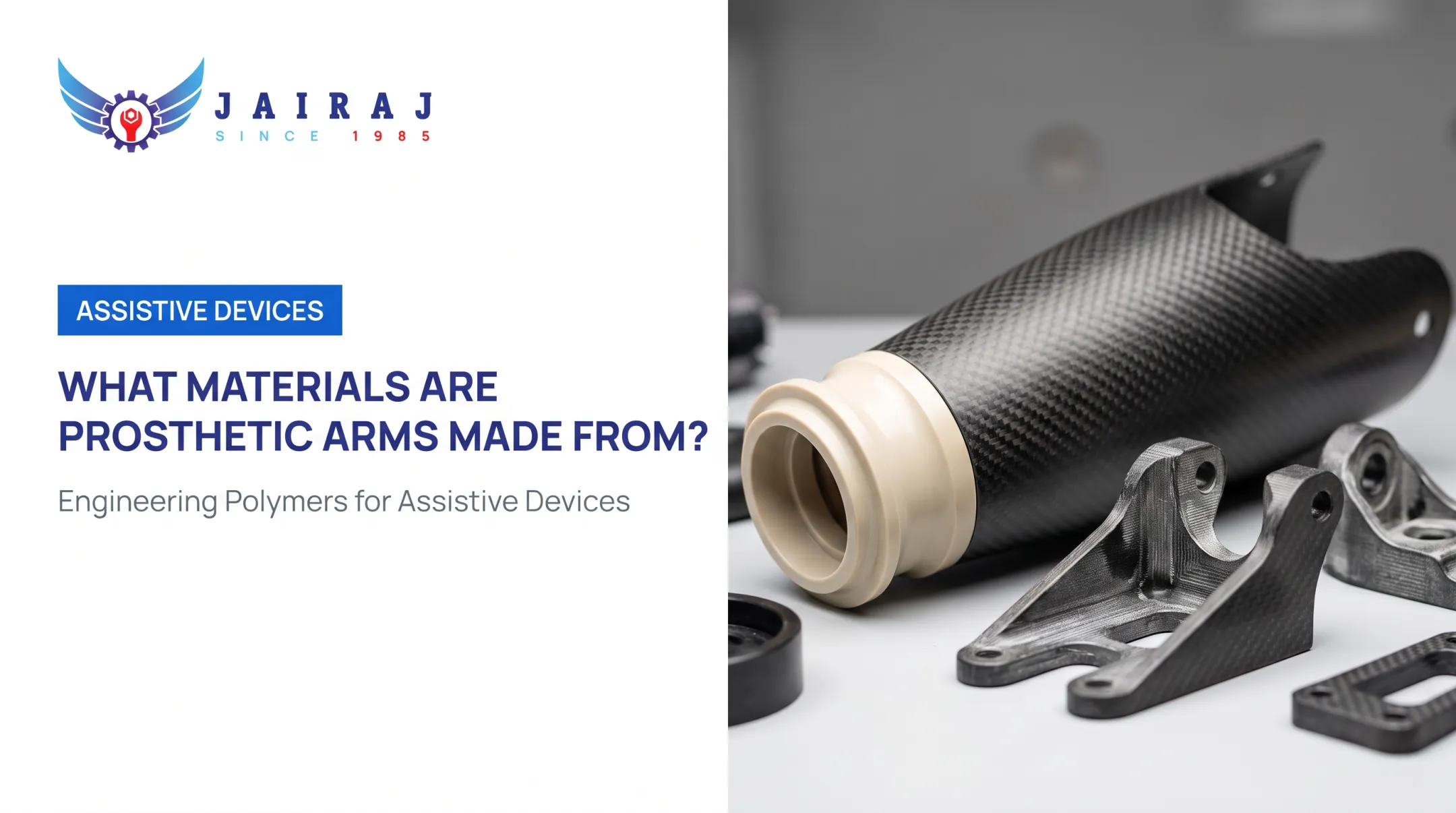
A carbon fiber socket consists of layers of carbon fiber bonded by a resin matrix. One documented process places fibers over a plaster model and infuses liquid acrylic resin under vacuum. Prepreg (pre-impregnated fiber) is an alternative route.
Key terms:
- Laminate: the bonded fiber and resin layers
- Lay-up: the type, arrangement, and orientation of those layers
- Curing: the hardening of the resin
- Fatigue: how the material responds to repeated loading
- Attachment: the hardware joining the socket to the rest of the prosthesis
Fiber orientation, layer count, reinforcement zones, and resin all influence performance. Carbon fiber names the reinforcement only, not the full construction.
Limb Level and Socket Type
Transtibial sockets (below the knee) are shaped to relieve sensitive areas such as the fibular head and distal tibia. Transfemoral sockets (above the knee) require brim design and socket-shape choices. Suspension also varies: suction, pump-driven vacuum, and locking pins are distinct options.
Carbon fiber may appear in a definitive socket, in selected structural zones, or rarely in a test socket. Test sockets are often transparent and heat-deformable for adjustment. Ask the prosthetist or fabricator to confirm exactly how yours is built.
Benefits and Limitations of Carbon Fiber Sockets
Where Carbon Fiber Helps
Weight is the headline advantage, though no single percentage applies across every design. A 2025 sprinting-socket study found selected designs withstood over 5,400 N (transfemoral) or 6,900 N (transtibial) at under 450 g. That is a tested-design benchmark, not a promise for every socket.
Other practical advantages:
- Reinforcement engineered around expected load paths
- Resistance to moisture-related problems
- Low routine maintenance
- Flexibility for personalized design
Liners, finishes, hardware, and resin systems still need care.
Tradeoffs and Failure Modes
A rigid socket supports stability, but too much stiffness or poor contouring can hurt comfort. Vibration transmission is another concern. In a 2021 comparison, flax sockets showed nearly four times better vibration damping than carbon, though that is preliminary lab evidence, not proof of patient comfort.
Documented failure modes include:
- Cracking and delamination
- Interlayer separation
- Damage around attachment points
- Distal collapse or pull-out
Lay-up affects failure behavior. A 2025 study of a 45/-45 prepreg lay-up showed ductile failure with visible warning signs before fracture. That was material testing, not a patient outcome.
Report pain, skin changes, unusual movement, new noise, visible cracks, or fit changes to your prosthetist. Don't keep using a damaged socket.

How Carbon Fiber Prosthetic Sockets Are Made and Tested
The Workflow
- Clinical assessment and limb measurement or scanning
- Positive model and rectification (shape modification)
- Diagnostic fitting with a test socket
- Definitive lay-up, then resin infusion or prepreg processing
- Curing
- Trimming, finishing, hardware installation, and alignment
The test socket checks pressure distribution, suspension, alignment, range of movement, and skin response. User feedback drives changes before final fabrication.
During definitive fabrication, layer schedule matters most at edges, openings, attachment interfaces, and geometry transitions. Defects in those zones reduce the loads a socket can sustain.
Quality Checks and Mechanical Testing
A responsible fabricator documents:
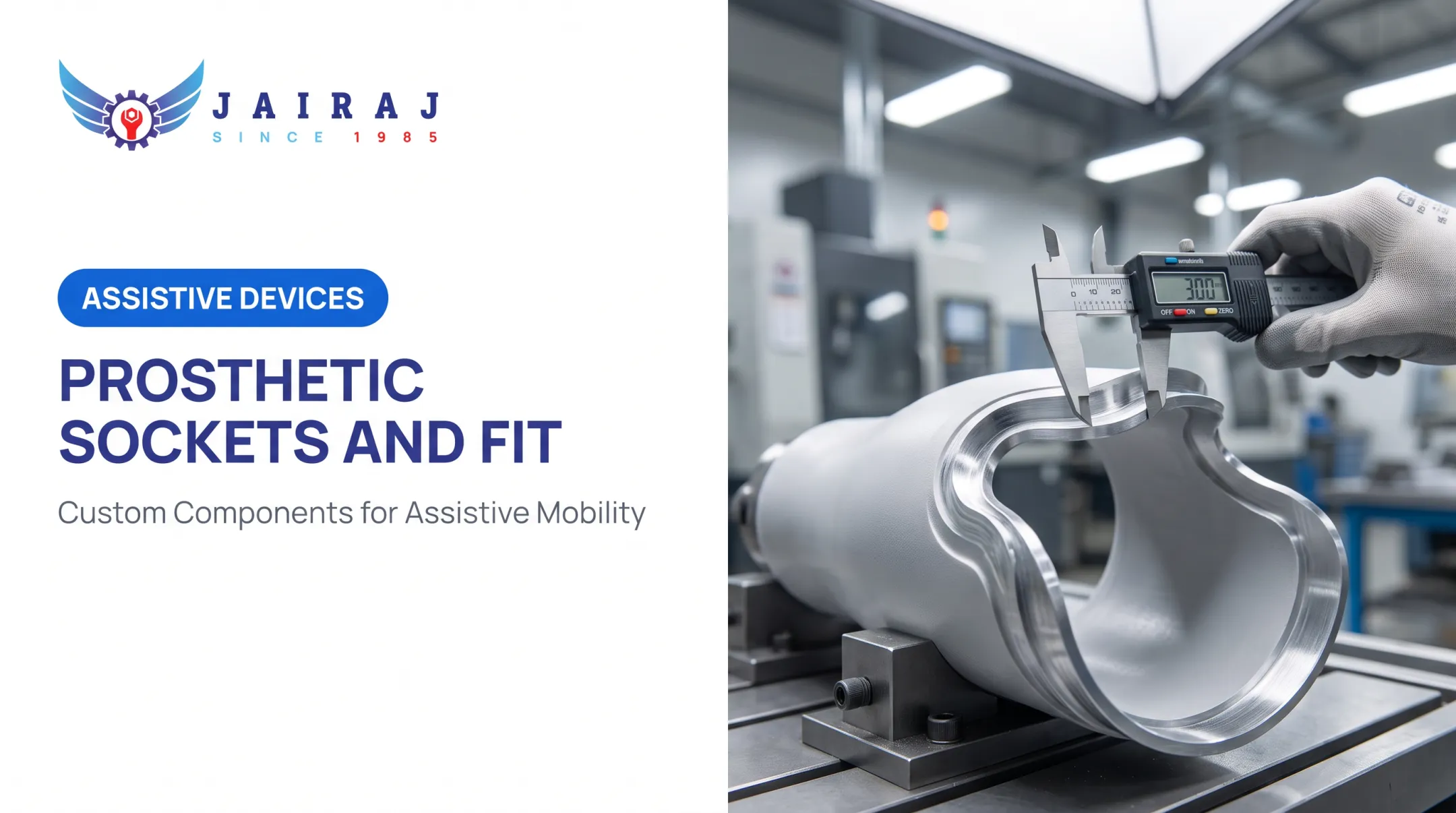
- Dimensional accuracy and visual inspection
- Surface and edge finish
- Laminate consistency
- Attachment security
- Material traceability
- Final inspection against design requirements
Lab methods include static loading, cyclic fatigue, impact testing, and finite element analysis. Static success does not establish fatigue life, and no lab result replaces clinical evaluation. Socket studies often adapt ISO 10328 for lower-limb structural testing; a 2026 revision is under publication.

US Regulatory Context
No single test or pathway applies to every socket. FDA classifies socket components under 21 CFR 890.3420 as Class I, while preassembled lower-limb prostheses fall under 890.3500 as Class II.
Socket components are exempt from most Part 820 requirements but still require records and complaint files. ABC fabrication accreditation also expects change-order records, conformity documentation, and a final inspection checklist.
Workshop Safety
Sanding and grinding create dust, and uncured resins are hazardous. OSHA standards on hazard communication (1910.1200), ventilation (1910.94), and PPE (1910.132) apply. Expect local exhaust, dust collection, SDS-based protective equipment, and respirator programs where indicated.
Carbon Fiber Compared With Other Socket Materials
| Material | What the evidence shows | Limits |
|---|---|---|
| Fiberglass | Carbon reinforcement ranked above fiberglass in a 2024 printed-socket strength comparison | Not a matched conventional-laminate test; cost and failure behavior unproven |
| Thermoplastic | Carbon-reinforced thermoformed systems allow spot-heating for fit changes | Manufacturer-specific; not every carbon socket can be reheated |
| 3D-printed polymers | Definitive PA12 nylon transtibial sockets are commercially available | Long-term equivalence unproven; carbon-filled filament is not a woven laminate |
| Basalt, natural fiber | Promising impact, flexure, and damping results in samples | Material-level studies only; delamination occurs |
A 2024 study found a long carbon-fiber printed design had 21.9% lower ultimate force than its laminated comparator.
A 2026 trial of adjustable pediatric sockets enrolled 28 children with no reported skin breakdown or mechanical failures. That result supports adjustability, not material superiority.
Carbon Fiber vs. Steel
Carbon fiber and steel do different jobs. Steel may appear in hardware, while a socket is a custom composite interface. Tensile strength alone cannot judge either material.
No material is universally best. Compare the complete design, fit, weight, fatigue performance, repair pathway, cost, and clinical goal.

How to Evaluate Cost, Fit, and Manufacturing Quality
What Drives US Cost
No reliable national price range exists for a carbon fiber socket alone or a carbon-equipped leg, so treat any single number with caution. Cost factors include:
- Amputation level and design complexity
- Diagnostic and definitive sockets
- Liners, suspension, connectors, and other components
- Appointments and fabrication labor
- Insurance, deductibles, and replacement needs
Medicare Part B generally leaves 20% after the deductible, subject to Medicare's coverage rules. Replacement reasons include physiological change, irreparable damage, or repair costing more than 60% of replacement. Reimbursement rules are not a clinical replacement schedule.
Fit Checklist for Patients and Caregivers
- Suspension stays stable
- Contact is comfortable with acceptable pressure
- Skin shows no redness, blisters, or sores after use
- Donning and doffing are manageable
- Attachment feels secure
- Alignment feels right when walking or during activity
Contact your clinic promptly for wounds, and immediately for abnormal looseness or noises.
Supplier Checklist for Clinics and OEMs
- Documented material specifications and sources
- Repeatable processes and inspection records
- Testing capability and traceability
- Quality management (ISO 13485 for medical devices, ISO 9001 for general quality)
- Delivery reliability and support for design changes
Certificates don't replace socket-specific inspection evidence.
Jairaj Group serves medical-device manufacturers and holds ISO 9001:2015 certification. Capabilities include CFRP, injection molding, CNC machining, compression molding, thermoforming, prototype development, and documentation with full traceability. It is a potential engineering or manufacturing partner for compatible components or development work, not a confirmed carbon fiber socket manufacturer.
Involve a qualified prosthetist for fitting, alignment, repairs, and any decision to keep using a socket that shows damage or causes discomfort.
Frequently Asked Questions
How much does a carbon fiber prosthetic leg cost?
A complete leg costs more than a socket alone, and price varies with design, components, clinical care, insurance, and replacement needs. There's no single US price, so request an itemized quote.
How are prosthetic sockets made?
The process runs from assessment and scanning to diagnostic fitting, model or digital design, lay-up, curing, and trimming. Hardware installation, alignment, and clinical adjustments finish the job.
Is carbon fiber good for prosthetics?
It can deliver strong, lightweight construction. Whether it suits you depends on fit, fiber design, resin, suspension, alignment, and individual comfort.
Is carbon fiber better than steel?
They usually serve different roles. Compare them for the specific socket, hardware, load, weight, fatigue, cost, and repair needs rather than by strength alone.
How long does a carbon fiber prosthetic socket last?
There is no universal lifespan. Activity, fit changes, loading, build quality, care, and damage all matter, so have a prosthetist inspect it regularly.
Can a carbon fiber socket be repaired or adjusted?
Minor fit or component changes may be possible. Cracks, delamination, or attachment damage may need professional repair or replacement. Don't sand or drill it at home, and don't keep using a visibly damaged socket.